
 Back to articles




Did you know that in 2026, businesses using advanced sales automation tools are closing deals up to 25% faster, thanks to AI-driven lead scoring and workflow efficiencies? As sales teams grapple with rising competition and the critical need for scalable, personalized outreach, selecting the right Customer Relationship Management (CRM) platform can truly make or break your lead generation efforts. In this comprehensive article, you'll discover the leading platforms, explore their key features, learn effective implementation strategies, and understand how specialized tools like our own GetSales.io fit into the mix to help you automate and personalize your B2B sales processes safely and effectively.
You Will Learn
- The essential features that define top CRMs for automating sales workflows and generating high-quality leads.
- A detailed comparison of leading platforms, including their strengths in multichannel outreach and AI integration.
- Actionable best practices for implementing these tools to scale your outbound prospecting.
- Common pitfalls to avoid when adopting sales automation software and how to mitigate them.
- Expert insights and real-world examples from industry leaders and successful sales teams.
- How to choose a CRM that prioritizes account safety, especially for LinkedIn-based lead generation, to ensure compliance and prevent disruptions.
Understanding Sales Automation and Lead Generation in 2026
In today's fast-paced B2B landscape, sales automation and lead generation have evolved from manual drudgery to sophisticated, AI-powered processes that are indispensable for driving revenue growth. At its core, sales automation involves using software to handle repetitive tasks like email sequencing, task assignment, and deal progression, thereby freeing up sales representatives to focus on high-value interactions such as strategic conversations and relationship building. Lead generation, meanwhile, encompasses the entire journey of identifying, enriching, and nurturing potential customers through diverse channels like email, LinkedIn, and SMS, transforming raw prospects into qualified opportunities.
According to recent data from G2, a staggering 91% of sales teams now rely on CRMs with built-in automation, resulting in improved forecast accuracy by up to 25% through predictive analytics and risk detection. This widespread adoption underscores the critical role automation plays in modern sales. This shift is further fueled by several key trends:
- Advanced AI Integration: AI is no longer just a buzzword; it's the engine powering modern lead generation. From natural language processing (NLP) for hyper-personalized email content to machine learning algorithms that analyze intent signals, AI helps sales teams understand prospect readiness and tailor outreach with unprecedented precision.
- No-Code Workflow Builders: The rise of no-code and low-code platforms empowers even non-technical sales professionals to create complex, custom workflows, automating everything from initial contact to follow-up sequences without needing developer support.
- Intent Data Utilization: Platforms are increasingly incorporating intent signals — data points indicating a prospect's buying readiness, such as website visits, content downloads, or competitor research — to trigger automated sequences at the optimal moment. This ensures outreach is timely and relevant, significantly boosting engagement rates.
- Data Privacy and Compliance: In 2026, with data privacy regulations like GDPR, CCPA, and others still at the forefront, CRMs must balance powerful lead enrichment with robust compliance features. This includes consent tracking, secure data handling, and transparent data usage policies. Tools that excel here not only boost engagement but also minimize legal risks and account bans on sensitive platforms like LinkedIn.
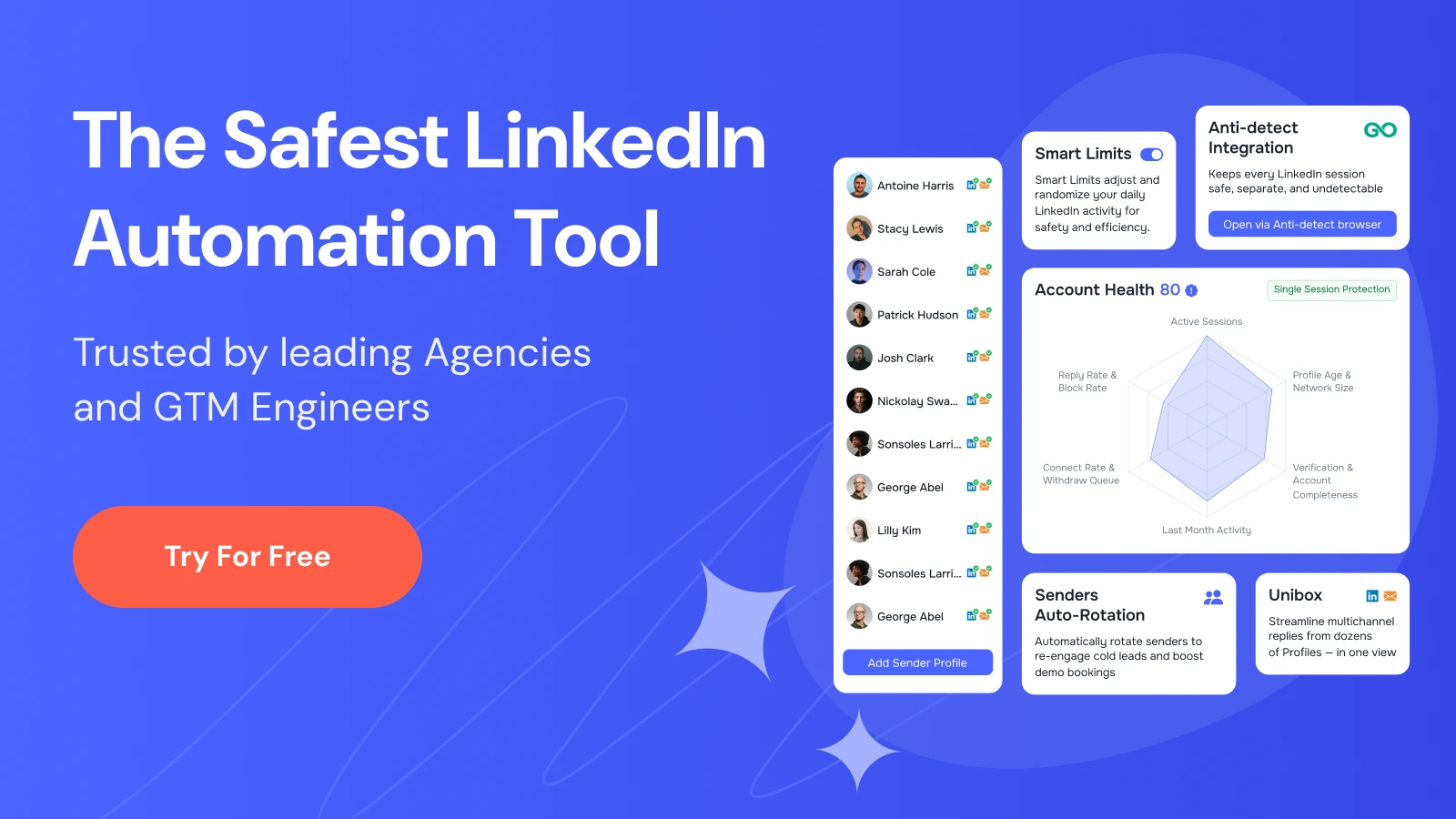
We at GetSales.io have seen firsthand how combining these elements can transform outbound strategies. Our cloud-based platform focuses on multichannel lead generation, particularly through LinkedIn and email, with features like rotating sender profiles and single session protection to ensure safety. This is crucial in an era where LinkedIn restrictions are tighter than ever — our approach makes outreach 10x safer than traditional methods, as echoed in user testimonials. For more on maintaining compliance and best practices for secure outreach, check out our comprehensive guide at LinkedIn Safety Best Practices.
Expert opinions consistently underscore the importance of these trends. As one sales leader noted in a recent Forbes article, "AI isn't just a buzzword; it's the engine powering modern lead gen, turning raw data into actionable insights that drive revenue" (Forbes on AI in Sales). Similarly, a G2 review highlights how automation reduces manual tasks, allowing teams to scale without proportional headcount increases, leading to significant cost efficiencies.
💡 Tip: When evaluating CRMs, prioritize those with omnichannel capabilities to unify your lead generation across platforms. This ensures a consistent brand experience and that no opportunity slips through the cracks, maximizing your outreach effectiveness.
To add depth, consider the background: CRMs originated in the 1990s as simple contact databases but have ballooned into sophisticated ecosystems handling everything from prospecting and pipeline management to customer service and advanced analytics. In 2026, the market is projected to exceed $100 billion, driven by demand for tools that integrate seamlessly with social platforms like LinkedIn and offer advanced AI capabilities (Wikipedia on CRM). Unique insights from industry reports reveal that businesses using automated lead scoring see a 30% uplift in qualified leads, emphasizing the critical need for data-driven personalization and efficient lead qualification.
Leading CRMs for Sales Automation and Lead Generation
Navigating the array of CRMs available in 2026 can be overwhelming, but focusing on those excelling in sales automation and lead generation narrows it down significantly. Based on recent G2 rankings, user reviews, and market share, standout options include HubSpot Sales Hub, Salesforce Sales Cloud, Pipedrive, Zoho CRM, and emerging players like Apollo.io and Outreach. These platforms offer a mix of AI-driven features, robust workflow builders, and extensive integration capabilities, but they vary significantly in scalability, ease of use, and cost, catering to different business needs.
Let's break it down with a detailed comparison table for clarity, highlighting why these are considered top CRMs for sales automation and lead generation:
|
CRM Platform |
Key Automation Features |
Lead Generation Strengths |
Starting Price (per user/month) |
Best For |
|---|---|---|---|---|
|
HubSpot Sales Hub |
AI lead scoring, email sequences, no-code workflow builder, meeting scheduling, sales playbooks |
Inbound lead capture, comprehensive enrichment via integrations, robust content management, marketing automation synergy |
$9 (Starter) |
Small to mid-sized teams seeking an all-in-one platform with strong inbound capabilities and simplicity. |
|
Salesforce Sales Cloud |
Einstein AI predictions (lead scoring, opportunity insights), high-velocity sales sequences, advanced process builders, CPQ |
Highly customizable pipelines, vast AppExchange for lead data and enrichment, enterprise-grade scalability, global reach |
Custom (~$25-300+) |
Enterprises needing deep customization, complex sales processes, and extensive third-party integrations. |
|
Pipedrive |
Visual pipelines, smart AI automations (e.g., deal rotting alerts), email tracking, activity reminders, chatbot integration |
Deal progression automation, quick setup, intuitive interface for managing sales activities, mobile accessibility |
$14.90 |
SMBs focused on intuitive interfaces, visual pipeline management, and streamlining core sales activities. |
|
Zoho CRM |
Zia AI for scoring and conversational assistance, Blueprint workflows, omnichannel support (email, phone, social), gamification |
Multilingual enrichment, extensive ecosystem of business apps, strong reporting and analytics, cost-effective for growing teams |
$12 (Basic) |
Cost-conscious international firms and businesses looking for a comprehensive suite of integrated business tools. |
|
Apollo.io |
Contact search and database, dialer, email sequences, LinkedIn outreach, meeting scheduler, intent data integration |
B2B prospecting with a massive contact database, intent signals for targeted outreach, sales engagement platform capabilities |
$49 |
Outbound-focused sales teams and SDRs prioritizing prospecting, contact data, and multi-channel engagement. |
|
GetSales.io (Our Platform) |
Rotating sender profiles, single session LinkedIn protection, omni-channel sequences (LinkedIn, email, SMS), unified inbox |
LinkedIn import/enrichment, account-based outreach, identity renting for scale, advanced analytics for safety and performance |
$59 |
B2B organizations, agencies, and sales VPs prioritizing high-safety, scalable multichannel outreach, especially on LinkedIn. |
From our research, HubSpot shines for its seamless integration of CRM and marketing automation, making it an ideal choice for beginners and growing teams focused on inbound strategies. Salesforce, with its vast ecosystem and unparalleled customization options, dominates the enterprise market but often requires significant setup time — typically 3-6 months for full implementation. Pipedrive's visual approach helps teams quickly visualize and manage their pipelines, leading to faster implementations, often in just 1-2 days. Zoho offers affordability and a broad ecosystem of integrated business perks, while Apollo.io is a go-to for prospecting-heavy workflows, providing a robust database and engagement tools.
What truly sets our GetSales.io apart in this competitive lineup? We are specifically tailored for high-safety, scalable LinkedIn outreach, a critical need in today's B2B landscape. Our platform incorporates unique features like identity renting, rotating sender profiles, and single session protection, which dramatically reduce ban rates and ensure compliance. Users report generating high-quality leads through account-level personalization, integrating effortlessly with email for comprehensive drip campaigns. For agencies and sales VPs, this means scaling outbound efforts without the headaches of account restrictions or compliance concerns. We've integrated with tools like Sales Navigator for enriched data, aligning perfectly with trends where multi-channel automation is key to boosting engagement by 20-30% (HubSpot Blog on Sales Trends).
Recent news from G2's February 2026 rankings confirms Zoho, Salesforce, and HubSpot as perennial top performers based on thousands of verified reviews, with AI features being a major differentiator across all categories. Insider knowledge from sales forums and industry reports suggests that platforms ignoring LinkedIn safety protocols are seeing higher churn rates and campaign disruptions, which is precisely why we emphasize compliance and robust safety features in every update and product iteration.
📌 Note: Always test a CRM's free trial or request a comprehensive demo to ensure it aligns perfectly with your team's specific workflow, integration needs, and lead generation scenarios. Many platforms offer robust trials that can simulate real-world usage.
Best Practices for Implementing Sales Automation Tools
To maximize the value of these powerful CRMs and achieve your lead generation goals, it's crucial to follow proven strategies that blend cutting-edge technology with human insight and strategic planning. Start by thoroughly assessing your specific needs: If you're a GTM engineer prioritizing stability, data accuracy, and low ban rates, opt for platforms with advanced APIs and robust safety features like ours at GetSales.io. For founders of lead generation agencies, focus on cost-effective, multi-channel options that can demonstrably enhance client conversions and provide detailed reporting.
Here's a step-by-step guide to successful implementation:
- Define Your Goals and KPIs: Before selecting or implementing any tool, clearly identify your key metrics. These might include lead volume, conversion rates at each stage of the funnel, outreach safety metrics (e.g., LinkedIn account health), and sales cycle length. For example, aim to automate 80% of repetitive administrative tasks to free up sales reps' time for high-value personalization and strategic interactions.
- Choose the Right Tool for Your Scale and Needs: Match the CRM to your organization's size and complexity. SMBs might pick Pipedrive for its speed and visual simplicity, while large enterprises will lean on Salesforce for its deep customization and scalability. At GetSales.io, we specifically recommend our platform for B2B teams and agencies needing LinkedIn-focused automation that prioritizes safety and multichannel reach without compromising on results.
- Integrate and Customize Thoughtfully: Connect your chosen CRM with existing sales and marketing tools, such as LinkedIn Sales Navigator for enriched data, email marketing platforms, and communication tools. Utilize no-code builders to set up automated sequences, A/B test different messaging, and configure event-triggered actions that respond dynamically to prospect behavior. Avoid over-customization initially; start with core functionalities and expand as your team becomes proficient.
- Train Your Team Extensively: Successful adoption hinges on thorough training. Conduct interactive sessions on how to leverage specific features like lead segmentation, advanced analytics dashboards, and personalized outreach templates. Our SDR CRM, for instance, includes intuitive task management features that ensure smooth adoption and consistent workflow execution across your team. Provide ongoing support and create internal champions to foster a culture of continuous learning.
- Monitor, Analyze, and Optimize Continuously: Sales automation is not a set-it-and-forget-it process. Regularly track your defined KPIs via built-in dashboards and custom reports. Adjust your strategies based on insights — for example, if email deliverability drops, consider rotating senders more frequently or refining your segmentation. A/B test different subject lines, call-to-actions, and sequence timings to continually improve performance.
- Ensure Compliance and Data Security: Adherence to data privacy guidelines (GDPR, CCPA, etc.) is non-negotiable. Implement CRMs that offer secure sessions, robust encryption, and explicit consent tracking tools to reduce legal risks and build trust with your prospects. Platforms like GetSales.io are built with these considerations in mind, offering features like single session access and anti-detect browser technology to maintain compliance and account safety.
Professional advice from experts consistently emphasizes starting small: "Begin with basic sequences and proven templates before scaling to AI-driven personalization and complex workflows," says a sales consultant in a recent LinkedIn post. This iterative approach has helped teams at numerous IT firms scale high-volume outreach while cutting operational costs by 15-20% and maintaining high engagement.
For those interested in deeper dives into how to implement these strategies effectively and explore specific features, schedule a demo with us at GetSales Inbound Content Session to explore how our platform aligns with these best practices and can be tailored to your unique sales process.
⚠️ Warning: Overlooking the importance of data enrichment can lead to poor lead quality and wasted automation efforts. Always integrate reliable data sources, such as LinkedIn Sales Navigator, to ensure your automation is targeting qualified prospects with accurate and up-to-date information.
Common Mistakes to Avoid in Sales Automation
Even with the most sophisticated tools, pitfalls abound in the world of sales automation. Being aware of these common errors can save your team significant time, resources, and frustration.
- Over-Customizing Too Early: While platforms like Salesforce offer immense customization, diving into complex configurations too soon can lead to lengthy delays, increased costs, and frustrated teams struggling with an overly complicated system. Start with core functionalities and scale customization gradually.
- Ignoring Integrations and Creating Data Silos: A common mistake is treating your CRM as an isolated tool. Failing to integrate it with existing marketing, customer service, or communication platforms creates data silos, hindering a holistic view of the customer journey and disrupting lead flow. This prevents a unified customer experience and accurate reporting.
- Underutilizing AI Features: Many teams adopt CRMs with advanced AI capabilities but only scratch the surface of their potential. Neglecting features like AI-driven lead scoring, predictive analytics, or personalized content generation means missing out on significant gains, such as the 25% better forecasting accuracy mentioned earlier.
- Choosing Overkill Software for Small Teams: Opting for an enterprise-grade CRM like Salesforce when you're a small team with basic needs can inflate costs unnecessarily and introduce complexity that overwhelms your users. Match the tool to your current scale and anticipated growth.
- Forcing Exact-Match Workflows Without Testing: Agencies often make the mistake of implementing pre-designed workflows without A/B testing or tailoring them to their specific client's audience and messaging. This can result in low engagement rates and ineffective campaigns. Always test, iterate, and optimize.
- Neglecting Safety Protocols, Especially on LinkedIn: VPs at enterprise firms sometimes overlook the critical importance of platform-specific safety protocols, particularly on LinkedIn. This can lead to account restrictions or outright bans, disrupting entire campaigns and damaging brand reputation. To counter this, we at GetSales.io built in robust protections like rotating sender profiles and single session access, making us a significantly safer choice for high-volume LinkedIn outreach.
- Poor Data Quality: Automating outreach to outdated, inaccurate, or incomplete lead data is a recipe for disaster. It leads to low deliverability, irrelevant messaging, and a poor brand image. Invest in data enrichment and cleansing processes regularly.
- Lack of Human Touch: While automation is powerful, over-reliance on it without any human intervention can make your outreach feel robotic and impersonal. Strategic human touchpoints, especially for high-value prospects, are crucial for building relationships.
💡 Tip: Regularly audit your automation sequences for relevance and performance. Outdated templates, generic messaging, or sequences that don't adapt to prospect behavior can tank response rates by up to 40% and damage your sender reputation.
Expert Insights and Real-World Examples
Drawing from a diverse range of industry voices and real-world applications, the impact of effective sales automation is clear. "HubSpot eliminates the need for separate tools for basic use cases, providing an integrated experience that simplifies sales operations for growing businesses," per a MarketBetter review. Another expert from Cirrus Insight adds, "Our AI acts as a co-pilot for sales reps, improving the accuracy of lead qualification and opportunity forecasting by up to 25%, allowing them to focus on closing."
In real-world scenarios, a mid-sized marketing agency using Zoho CRM successfully standardized its lead nurturing processes via custom Blueprint workflows. This not only ensured consistent follow-up but also boosted team motivation through gamification features, leading to a 15% increase in qualified leads within six months. Similarly, an IT solutions firm leveraging Pipedrive implemented its CRM in just days, quickly visualizing its sales pipelines. This clarity enabled them to identify bottlenecks and optimize their sales process, resulting in a 10% reduction in average sales cycle length.
At GetSales.io, we've had the privilege of helping numerous organizations achieve remarkable results. For instance, a prominent recruitment agency specializing in tech placements was struggling with LinkedIn account bans due to aggressive outreach tactics. By implementing GetSales.io's platform, they were able to scale their LinkedIn outreach safely, generating hundreds of high-quality leads monthly without any account restrictions. Frédéric D, Co-founder of MirrorProfiles, a leading sales agency, shares his experience: "GetSales is hands down the safest and most reliable option we've tested for LinkedIn automation. Stop reading, just watch our demo – the results speak for themselves." These examples powerfully highlight how blending intelligent automation with robust safety features drives tangible, sustainable results in today's competitive sales environment.
For more success stories and detailed case studies, visit GetSales.io.
FAQ
What are the key features to look for in a CRM for sales automation? Focus on AI-driven lead scoring, intuitive workflow builders, multichannel sequencing capabilities (email, LinkedIn, SMS), robust analytics, and seamless integrations with your existing tech stack. Data privacy and compliance features are also paramount.
How does lead generation differ in 2026 compared to previous years? Lead generation in 2026 is significantly more AI-driven, leveraging intent signals, predictive analytics, and hyper-personalization. It also emphasizes omnichannel approaches to engage prospects across multiple platforms, as highlighted by recent G2 trends and industry reports.
Is GetSales.io suitable for enterprise-level sales teams? Absolutely. Our platform is designed to support large-scale, safe outreach for sales VPs, GTM engineers, and entire sales teams in IT, software, and other B2B firms. Our advanced CRM integrations, comprehensive analytics, and robust safety features ensure compliance and scalability for enterprise needs.
What regulations should I consider for CRM data handling? You must prioritize GDPR, CCPA, and other relevant regional data privacy regulations. Look for tools with strong encryption, explicit consent features, data anonymization capabilities, and secure data handling protocols to avoid privacy breaches and legal repercussions.
How can I reduce LinkedIn ban risks with automation? To significantly reduce LinkedIn ban risks, use platforms like GetSales.io that offer advanced safety features such as rotating sender profiles, single session protection, anti-detect browser technology, and identity renting. These features mimic human behavior and protect your accounts.
What's the typical ROI of investing in these CRMs? Teams often see a significant ROI, including 20-30% higher conversion rates through automation, reduced sales cycle lengths, and increased sales productivity. Many businesses report quick paybacks, often within a few months, due to increased efficiency and revenue generation.
Ready to Scale Your Outreach?
If you're a GTM engineer, agency founder, or sales VP ready to elevate your lead generation with safe, automated tools, GetSales.io is here to help you achieve unprecedented growth. Our cloud-based platform automates personalized LinkedIn and email campaigns, ensuring low ban rates and high conversions through intelligent, compliant outreach. Start transforming your sales strategy today with our affordable plans from just $59/month, or book a personalized session at Inbound Content Demo to see our features in action. Visit GetSales.io to discover how you can automate, personalize, and scale your B2B sales processes safely — because in 2026, safe scaling wins.