
 Back to articles




In 2026, sales development representatives (SDRs) are closing deals 20-40% faster when using CRMs with user-friendly designs that cut down on administrative hassle, according to recent G2 reviews. But with the rise of multichannel outreach, many teams still struggle with clunky tools that slow down lead generation and personalization efforts. In this article, we'll explore how a CRM featuring an intuitive interface can transform SDR workflows, drawing on the latest trends, expert advice, and real-world examples to help you scale your B2B sales safely and efficiently.
You Will Learn
- How intuitive CRM interfaces boost SDR productivity by reducing time spent on data entry and navigation.
- Key features to look for in a CRM that supports multichannel lead generation, including LinkedIn and email integration.
- Best practices for implementing these tools to minimize LinkedIn account risks and maximize conversions.
- Common pitfalls in CRM adoption and how to avoid them for smoother team collaboration.
- Insights from sales leaders on scaling outreach in 2026's competitive landscape.
- Actionable steps to integrate CRM with automation for personalized, high-volume prospecting.
The Evolution of CRM for SDRs
Customer relationship management (CRM) systems have come a long way since their early days as basic databases for tracking contacts. By 2026, they've transformed into dynamic platforms that prioritize ease of use, especially for SDRs who juggle high-volume outreach across channels like LinkedIn and email. This shift is driven by the need for tools that align with fast-paced sales environments, where reps spend less time wrestling with interfaces and more on building relationships.
Historically, CRMs were admin-heavy, forcing users to navigate complex menus and manual entries. But modern iterations, informed by user feedback and AI advancements, focus on visual, drag-and-drop elements that make managing leads feel intuitive. For instance, platforms like Pipedrive and Zoho CRM have popularized visual pipelines, allowing SDRs to drag deals through stages in minutes rather than hours. This evolution mirrors broader B2B sales trends, where automation and personalization are key to scaling without burnout.
Statistics highlight the impact: Teams using intuitive CRMs report up to 30% less time on administrative tasks, per G2 data from over 2,000 users. In a world where SDRs handle hundreds of leads daily, this efficiency translates to more conversations and higher conversion rates. At GetSales.io, we've built our platform with this in mind, offering an SDR-focused CRM that integrates seamlessly with LinkedIn automation to enrich leads and automate tasks without overwhelming users.
Background information shows that CRM adoption surged during the remote work boom of the early 2020s, leading to innovations like AI-driven insights and mobile-first designs. Today, in 2026, regulations such as GDPR and CCPA emphasize data privacy, pushing CRMs to include compliant features like role-based access and consent tracking. This is crucial for SDRs engaging in multichannel prospecting, where mishandling data can lead to compliance issues or account restrictions on platforms like LinkedIn.
Unique insights from sales workflows reveal that SDRs often prioritize tools that unify communications. Imagine logging a LinkedIn message, an email follow-up, and a task reminder all in one view — no switching tabs or apps. This streamlined approach reduces cognitive load, allowing reps to focus on personalization, such as tailoring messages based on account-level data. Recent news from sources like Forbes notes that AI autonomy in CRMs, like auto-scheduling meetings from buying signals, is a game-changer for B2B lead generation.
💡 Tip: When evaluating a CRM, test its mobile app during a trial — SDRs on the go need quick access to pipelines without desktop dependency.
For those prioritizing LinkedIn safety, our LinkedIn Safety guide provides deeper strategies to avoid bans while scaling outreach.
Key Features of an Intuitive CRM Interface
An effective CRM for SDRs isn't just about storing data; it's about an interface that feels natural, accelerating workflows from lead import to deal closure. In 2026, top features include visual dashboards, automated task assignments, and seamless integrations that support multichannel strategies.
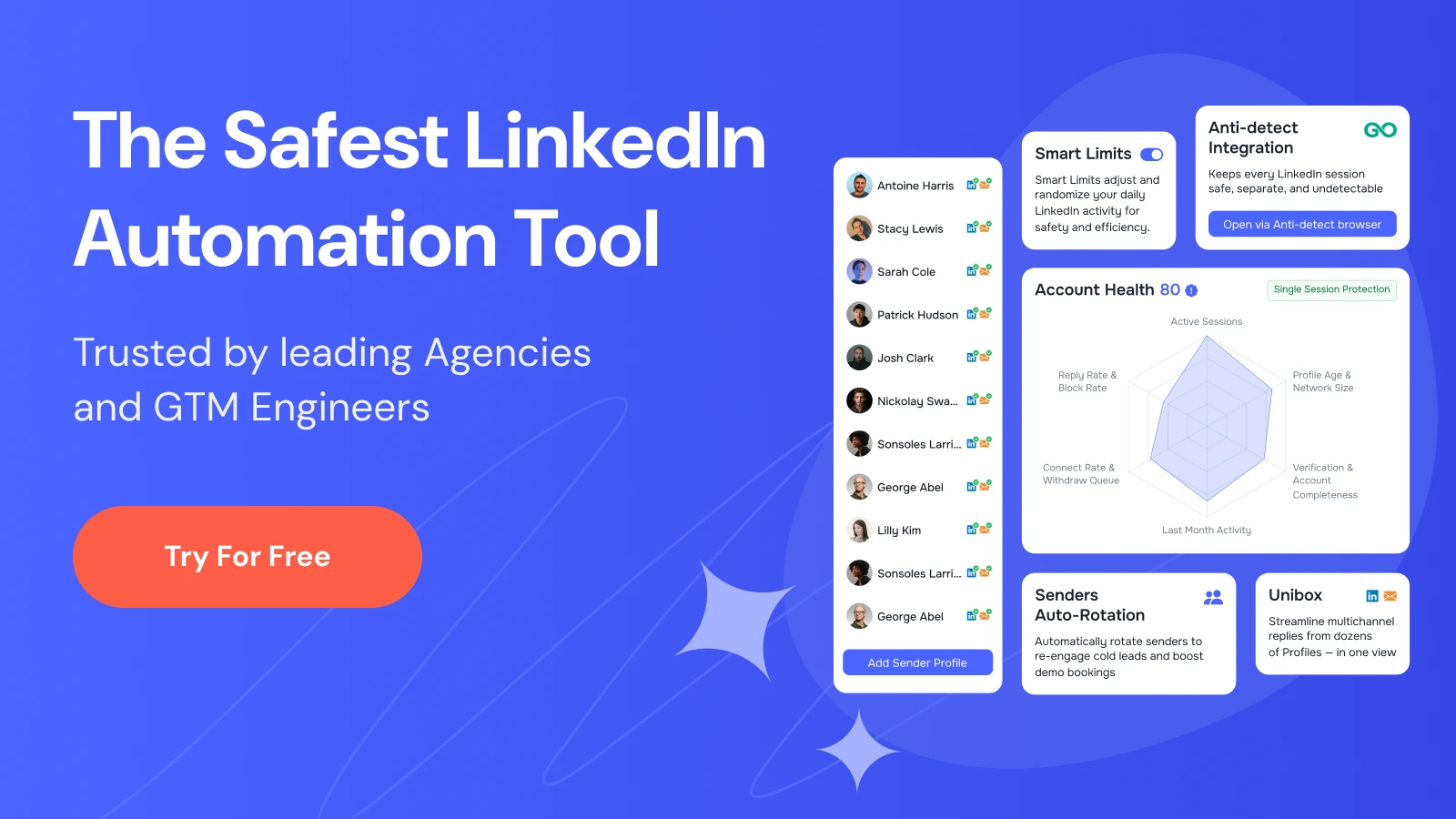
Consider visual pipelines: These allow SDRs to see deal progression at a glance, with drag-and-drop functionality for updating statuses. Tools like Copper and monday.com excel here, enabling custom views that match real sales processes. For GetSales.io users, our unified inbox manages LinkedIn and email communications in one dashboard, making it easy to rotate sender profiles and maintain account safety during high-volume campaigns.
Another standout is task automation. SDRs can incorporate manual steps into workflows, ensuring no lead slips through. Our platform's SDR CRM with tasks does this intuitively, blending automation with human oversight for personalized outreach. Statistics show this leads to 20-40% faster deal advancement, as reps spend less time on navigation and more on engagement.
Enrichment and segmentation are also vital. Importing data from LinkedIn Sales Navigator and enriching it with details like job changes or company news allows for ultra-targeted campaigns. Zoho CRM's SalesSignals, for example, notifies reps of intent data, while GetSales.io takes it further with account-based outreach that personalizes at scale.
Here's a quick comparison of intuitive CRM features relevant to SDRs:
|
Feature |
Benefit for SDRs |
Example Tools |
|---|---|---|
|
Visual Pipelines |
Quick status updates, reduced admin time |
Pipedrive, GetSales.io |
|
Task Automation |
Ensures follow-ups without manual reminders |
Zoho CRM, monday.com |
|
Multichannel Integration |
Unified LinkedIn/email management |
Copper, GetSales.io |
|
Data Enrichment |
Improves lead quality and personalization |
Sales Navigator add-ons, GetSales.io |
|
Analytics Dashboards |
Real-time performance tracking |
All major CRMs |
Professional advice emphasizes starting with core needs: If your team focuses on LinkedIn, ensure the CRM supports single-session protection to avoid restrictions. We've seen agencies scale outreach by 10x using our rotating sender profiles, all within an interface that's easy to navigate even for new hires.
Recent trends in 2026 highlight AI nudges — subtle prompts that flag stalled deals or suggest next actions. This not only boosts efficiency but also aligns with B2B techniques like A/B testing drip campaigns. For more on integrating these with safe automation, check our main site.
⚠️ Warning: Avoid CRMs with outdated UIs that require extensive training; they can lead to low adoption rates and frustrated SDR teams.
Best Practices for SDRs Using Intuitive CRMs
To maximize a CRM's potential, SDRs should follow structured practices that blend technology with proven sales techniques. Here's how to implement one effectively in your 2026 workflows.
- Map Your Sales Process: Start by defining stages like lead qualification, outreach, and nurturing. Use the CRM's intuitive tools to customize pipelines — drag and drop to mirror your flow, ensuring it supports multichannel touches.
- Integrate Data Sources: Connect LinkedIn and email for automatic enrichment. In GetSales.io, this means scraping profiles safely and segmenting leads for targeted messaging, reducing ban risks through single-session access.
- Automate Where It Counts: Set up event-triggered actions, like follow-up emails after a LinkedIn view. Combine this with A/B testing to refine templates, aiming for higher engagement rates.
- Train and Monitor: Roll out short sessions focusing on one feature weekly. Use analytics to track metrics like response rates, optimizing for what works in B2B lead gen.
- Personalize at Scale: Leverage CRM insights for account-level strategies. For example, enrich data to send tailored LinkedIn invites, boosting conversions without spamming.
Case studies show success: A marketing agency using an intuitive CRM like Capsule reported faster onboarding and revenue growth by minimizing admin. Similarly, enterprise teams with GetSales.io have scaled safely, with analytics revealing optimized strategies in real time.
Insider knowledge stresses compliance — always enable privacy features to adhere to GDPR guidelines, especially in international outreach.
For hands-on advice, book a demo via our inbound content session.
📌 Note: Regularly audit your CRM data for accuracy; outdated info can derail personalization efforts in multichannel campaigns.
Common Mistakes to Avoid
Even with an intuitive interface, SDRs can stumble if not careful. One common error is overloading the CRM with unnecessary customizations, leading to a cluttered dashboard that defeats the purpose of simplicity. Stick to essential features to maintain usability.
Another pitfall is ignoring integration limits. Not all CRMs play well with LinkedIn automation; choosing one without safety measures can result in account bans. We've addressed this at GetSales.io with anti-detect technology, but always verify compliance.
Failing to train teams properly is a big issue — reps might underuse powerful tools like task automation, missing out on efficiency gains. Statistics from G2 indicate that poor adoption leads to 30% lower productivity.
Over-relying on automation without human touches can make outreach feel robotic, harming conversions. Balance it with personalization.
Lastly, neglecting analytics: Without monitoring insights, you can't optimize. Avoid this by setting weekly reviews.
💡 Tip: Pilot your CRM with a small team subset before full rollout to iron out issues early.
Expert Insights
Sales leaders emphasize the value of intuitive CRMs in 2026's landscape. As one G2 reviewer noted on Pipedrive: "The visual pipeline is genuinely helpful for SDR managers tracking rep progress — setup takes hours, not weeks."
Frédéric D, Co-founder of MirrorProfiles, shares: "Our tool is the safest and most reliable option we've tested, enabling 10x safer LinkedIn outreach." This aligns with GetSales.io's approach, where we've helped agencies achieve superior stability.
A VP of Business Development at an IT firm recounted: "Switching to a CRM with drag-and-drop tasks reduced our ban rates and scaled high-volume outreach cost-effectively."
Real-world examples include a recruitment agency using Zoho's intuitive features to automate lead assignment, resulting in 40% faster deal progression. At GetSales.io, similar integrations have driven conversions for B2B organizations.
For more expert takes, explore Wikipedia's CRM overview or G2's CRM rankings.
FAQ
What makes a CRM interface intuitive for SDRs? It features visual elements like drag-and-drop pipelines, auto-logging, and unified views that minimize clicks and align with daily workflows.
How does CRM integration improve LinkedIn outreach? By enriching leads and automating sequences safely, reducing risks while personalizing at scale — key for B2B in 2026.
Are there regulations SDRs should know when using CRMs? Yes, GDPR and CCPA require consent tracking and data segmentation; choose compliant tools to avoid fines.
What's the cost range for intuitive CRMs? Entry-level plans start at $19/user/month, with advanced options like GetSales.io at $59/month for full features.
Can intuitive CRMs handle multichannel automation? Absolutely — they support LinkedIn, email, and SMS, with no-code builders for custom sequences.
How do I measure CRM success for my SDR team? Track metrics like deal velocity, response rates, and admin time saved via built-in analytics.
Ready to Scale Your Outreach?
If you're a GTM engineer, agency founder, or sales VP looking to enhance your team's efficiency with a CRM that offers an intuitive interface for SDRs, GetSales.io is here to help. Our cloud-based platform combines advanced automation, lead enrichment, and safety features to drive results. Stop settling for clunky tools — explore GetSales.io today or schedule a personalized demo to see how we can 10x your conversions. For tips on safe scaling, visit our LinkedIn Safety resource.
For further reading, check these authoritative sources: Forbes on CRM Trends, HubSpot's Sales Blog, Salesforce's CRM Guide, and Harvard Business Review on Sales Productivity.