
 Back to articles




In 2026, agencies are facing unprecedented pressure to optimize sales pipelines amid rising competition, with studies showing that teams using advanced CRM systems can boost revenue by up to 29% through better lead management and automation. But with so many options available, how do you choose the right CRM tools for agency sales performance without risking account safety or overwhelming your team? In this article, we'll explore the landscape of CRM tools tailored for agency sales, providing insights on integration, best practices, and real-world applications to help you scale outreach efficiently and securely.
You Will Learn
- The key features of top CRM tools that drive agency sales success in 2026.
- How these systems integrate with multichannel automation for LinkedIn and email campaigns.
- Actionable strategies to personalize outreach and improve conversion rates.
- Common pitfalls in CRM adoption and how to avoid them.
- Expert advice on selecting tools that prioritize safety and compliance.
- Ways to leverage analytics for data-driven sales decisions.
Understanding CRM Tools in Agency Environments
Agencies today operate in a fast-paced world where managing client relationships and driving sales performance are critical to survival. At their core, CRM tools serve as centralized hubs for tracking interactions, automating workflows, and analyzing data to enhance sales outcomes. For agencies focused on B2B lead generation, these systems go beyond basic contact management — they enable teams to handle multichannel outreach, from LinkedIn prospecting to email nurturing, all while maintaining compliance and account safety. The right CRM tools for agency sales performance are not just about data storage; they are about strategic growth.
Consider the evolution of CRM in 2026: With AI integration becoming standard, tools now offer predictive lead scoring and automated personalization, helping agencies identify high-value prospects more effectively. For instance, an agency managing multiple client campaigns can use AI to automatically score leads based on their engagement history and demographic data, prioritizing those most likely to convert. This means sales reps spend less time on unqualified leads and more time on high-potential opportunities. According to a recent report from Salesforce's State of Sales, organizations using AI-driven CRM features see a 42% improvement in forecast accuracy, which is invaluable for agencies juggling multiple client campaigns and needing precise revenue projections. This isn't just about storing data; it's about transforming it into actionable insights that fuel growth.
AI-powered personalization is another game-changer for agencies. Instead of generic outreach, CRM systems can now suggest hyper-personalized messages based on a prospect's industry, company size, recent news, or even their LinkedIn activity. This level of customization significantly boosts engagement rates, a crucial factor for agencies trying to stand out in a crowded market. Imagine an agency automatically generating tailored email sequences for different client segments, each message resonating deeply with the recipient's specific pain points.
In agency settings, CRM tools shine by unifying disparate processes. For instance, they allow sales teams to segment leads based on behavior, enrich data from sources like LinkedIn Sales Navigator, and automate follow-ups across channels. This integration reduces manual effort, letting reps focus on closing deals rather than administrative tasks. Background research highlights that agencies adopting such systems report a 20-30% productivity boost, as automation handles repetitive elements like task reminders, email sequences, and even initial qualification questions. This frees up valuable time for strategic thinking and client-facing activities.
But what sets agency-focused CRM apart? Beyond standard features, they often include visual pipelines that provide a clear overview of all client projects and sales stages, allowing agency leaders to quickly identify bottlenecks or opportunities. Gamification elements can encourage collaboration and healthy competition among sales teams, boosting motivation and performance. Advanced analytics provide client-specific insights, helping agencies understand which strategies are most effective for different types of clients. Tools in this space often include built-in compliance measures, such as role-based permissions and audit trails, aligning with regulations like GDPR and CCPA to protect sensitive data. Recent news from tech outlets notes a surge in AI agents that autonomously identify prospects and even draft initial outreach messages, making these tools even more potent for scaling operations without increasing headcount.
💡 Tip: When evaluating CRM options, prioritize those with seamless third-party integrations to avoid data silos and streamline your workflow. Look for robust APIs and pre-built connectors to your existing marketing automation, social media, and communication platforms.
For agencies, the real value lies in how these tools support multichannel strategies. By combining CRM with automation platforms, teams can orchestrate personalized campaigns that resonate at the account level, leading to higher engagement rates. This approach is particularly effective in B2B environments, where long sales cycles demand consistent nurturing across various touchpoints, from LinkedIn messages to targeted emails and even follow-up calls. The ability to track every interaction in one place ensures a cohesive and informed sales process.
Top CRM Tools Enhancing Sales in 2026
Diving deeper, let's examine some standout CRM tools for agency sales performance that are reshaping agency sales this year. Based on recent analyses, platforms like Salesforce, Zoho CRM, and Pipedrive lead the pack, each offering unique strengths for agencies aiming to scale outbound efforts.
Salesforce remains a powerhouse, with its Einstein AI providing predictive scoring, automated quote generation, and intelligent lead routing. Agencies appreciate its vast ecosystem of over 5,000 integrations, including direct ties to LinkedIn Sales Navigator for enriched lead data and deeper insights into prospect behavior. For a large agency managing complex, high-value B2B accounts, Salesforce's robust reporting and customization capabilities allow for granular tracking of client journeys and highly accurate revenue forecasting. A key statistic from Salesforce's own reports shows that users experience a 42% uplift in forecasting precision, making it ideal for complex B2B deals where accuracy matters.
Zoho CRM, on the other hand, stands out for its affordability and comprehensive features like Zia AI for anomaly detection, sales forecasting, and blueprint automation. It's particularly suited for smaller to mid-sized agencies, offering omnichannel support across email, social, and chat without breaking the bank. Insider knowledge from industry reviews praises Zoho for its gamification elements, which motivate sales teams and improve performance metrics by turning sales activities into engaging challenges. An agency focused on rapid growth with a lean budget can leverage Zoho's all-in-one suite to manage leads, automate marketing, and track sales without needing multiple subscriptions.
Pipedrive excels in visual, activity-based selling with intuitive drag-and-drop pipelines and AI-driven deal recommendations. Its email tracking integrates smoothly with Gmail and Outlook, automating logging and follow-ups, ensuring no communication is missed. For agencies, this means a 20-30% reduction in administrative time, freeing up resources for high-impact outreach and client strategy. A creative agency, for example, might find Pipedrive's visual interface perfect for managing diverse client projects and quickly identifying which deals need immediate attention.
Other notable mentions include monday CRM for its highly customizable workflows, real-time data enrichment, and collaborative features that prevent data silos across agency departments. Microsoft Dynamics 365 Sales offers native LinkedIn integration and relationship analytics, leveraging the Microsoft ecosystem for seamless data flow, especially beneficial for agencies already using Microsoft products. ActiveCampaign blends CRM with powerful marketing automation, perfect for nurturing long-cycle leads through highly personalized email drips and automated follow-up sequences, making it ideal for agencies with sophisticated content marketing strategies.
To compare these tools side by side, here's a quick overview:
|
Tool |
Key Agency Benefit |
Pricing (2026) |
Standout Integration |
Agency Use Case Example |
Salesforce |
AI predictive scoring for forecasts |
Enterprise tiers |
LinkedIn Sales Navigator |
A large digital agency uses Salesforce to manage complex B2B sales cycles, leveraging Einstein AI for predictive lead scoring to identify high-value prospects and automate personalized outreach. Their sales team benefits from the vast integration ecosystem, especially with LinkedIn Sales Navigator, to enrich lead data and track prospect engagement, leading to a 35% increase in qualified opportunities. |
|
Zoho CRM |
Affordable omnichannel automation |
Value-focused plans |
Email and social sync |
A growing marketing agency utilizes Zoho CRM for its comprehensive yet affordable features. They automate email and social media campaigns, manage client communications through a unified inbox, and use Zia AI for sales forecasting and anomaly detection. The gamification features have boosted team motivation, contributing to a 25% improvement in monthly sales targets. |
|
Pipedrive |
Visual pipelines for quick insights |
Mid-market pricing |
Gmail/Outlook tracking |
A specialized PR agency relies on Pipedrive's visual pipelines to manage multiple client pitches and media outreach campaigns. The drag-and-drop interface allows them to quickly update deal stages, while automated email tracking with Gmail ensures all client communications are logged. This has led to a 20% reduction in administrative tasks, allowing reps to focus more on relationship building. |
|
monday CRM |
Custom workflows without silos |
Flexible for teams |
Real-time enrichment |
A creative design agency uses monday CRM to manage its diverse client portfolio, building custom workflows for each project type. Its real-time data enrichment helps them quickly qualify new leads, and its collaborative features ensure seamless communication between sales and project management teams, preventing data silos and improving client satisfaction. |
|
Dynamics 365 |
Buyer intent signals from LinkedIn |
Microsoft ecosystem |
Outlook/Teams native |
An IT consulting agency leverages Microsoft Dynamics 365 Sales for its deep integration with LinkedIn and the broader Microsoft ecosystem. They utilize buyer intent signals from LinkedIn to identify companies actively researching their services, and native integration with Outlook and Teams streamlines internal collaboration and client communication, resulting in a 15% increase in enterprise client acquisition. |
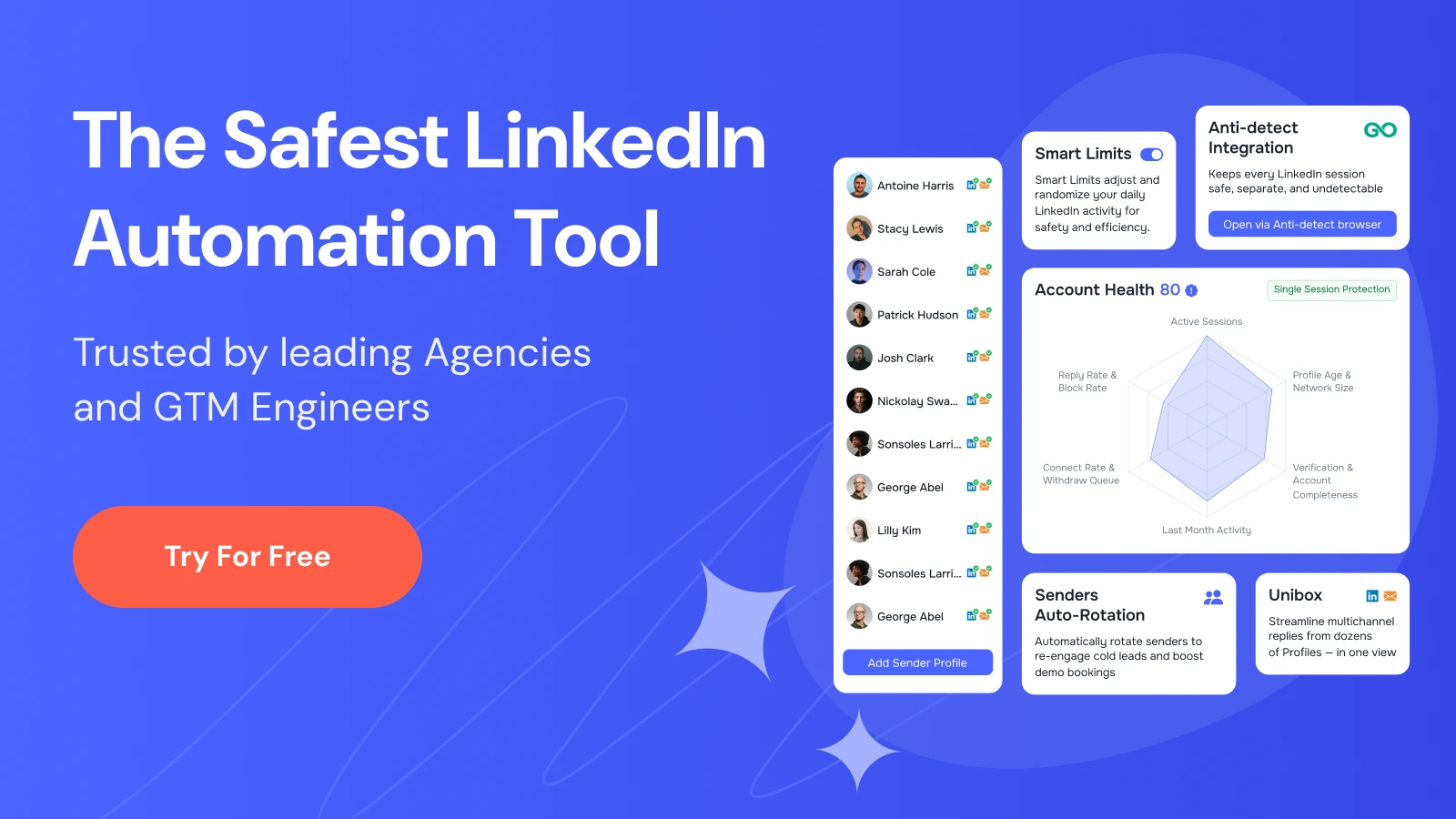
These tools integrate well with sales automation platforms, enhancing multichannel lead generation. For example, pairing them with solutions like ours at GetSales.io allows agencies to automate LinkedIn and email outreach from a unified dashboard, boosting reach while ensuring safety through features like Single Session Protection. This unique feature allows multiple team members to access and manage LinkedIn accounts securely from the cloud without triggering security flags, a critical advantage for agencies scaling their outreach.
Recent news from sources like Forbes indicates that in 2026, AI-enhanced CRMs are driving a shift toward revenue intelligence, with platforms like SalesPlay predicting outcomes beyond traditional metrics. This evolution helps agencies not just manage sales but anticipate market shifts and proactively adjust their strategies.
⚠️ Warning: Avoid tools without strong security features, as non-compliant systems can lead to data breaches and regulatory fines under policies like CCPA and GDPR. Always verify a CRM's data protection protocols and compliance certifications.
Best Practices for Implementing CRM in Agencies
To truly harness CRM tools for agency sales performance, agencies need a structured approach. Start by assessing your current processes — identify pain points like disjointed lead tracking, inefficient outreach, or a lack of centralized client data. Then, select a tool that aligns with your scale and specific needs; for instance, if LinkedIn is your primary channel for lead generation, opt for one with robust integrations and safety features like those offered by GetSales.io.
Here are actionable steps to implement effectively:
- Define Your Goals: Clearly outline specific, measurable objectives. For example, aim to increase lead conversion by 15% through personalized automation, or reduce sales cycle length by 10% within six months. These goals will guide your CRM selection and implementation strategy.
- Train Your Team Thoroughly: CRM adoption hinges on user buy-in. Provide comprehensive training, use built-in tutorials, and leverage gamification features (like those in Zoho CRM) to make the learning process engaging and ensure quick adoption. Ongoing support and refresher courses are also crucial.
- Integrate Channels for Omnichannel Outreach: Connect your CRM to all relevant communication tools, including email platforms, LinkedIn automation tools, and even SMS gateways. This enables you to orchestrate sophisticated omnichannel sequences, automating drips, follow-ups, and personalized messages across various touchpoints, ensuring a consistent brand experience.
- Leverage Analytics for Data-Driven Decisions: Set up customized dashboards to monitor key metrics like engagement rates, pipeline health, conversion rates by channel, and individual sales rep performance. Regularly review these insights to identify what's working, what's not, and where to optimize your strategies.
- Test and Iterate Continuously: The sales landscape is constantly evolving. Run A/B tests on your outreach campaigns, messaging, and automation sequences. Refine your strategies based on real-time performance data and feedback, ensuring your CRM usage remains agile and effective.
- Ensure Compliance and Data Safety: Regularly audit user access and permissions within your CRM. Utilize robust safety features like data encryption, audit trails, and role-based access controls to minimize risks, especially when handling sensitive client data in regulated sectors. Prioritize tools that offer advanced account protection, such as GetSales.io's Single Session Protection for LinkedIn.
Professional advice emphasizes starting small: Pilot the tool with one team or a specific campaign before a full agency-wide rollout. This allows you to identify and resolve issues in a controlled environment. Expert quotes from industry leaders, like those highlighted in Gartner's 2026 CRM Magic Quadrant, stress the importance of composable architectures for evolving agency needs, allowing for flexibility and scalability.
At GetSales.io, we've seen agencies transform their outreach by integrating our cloud-based platform with these leading CRMs. Our LinkedIn safety features ensure low ban rates, allowing safe scaling of multichannel campaigns. By centralizing LinkedIn and email outreach, agencies can manage multiple client accounts from a single dashboard, ensuring consistency and maximizing efficiency.
Incorporating unique insights, agencies should focus on strategies like identity renting and rotating sender profiles to maximize volume without detection risks — features that pair perfectly with CRM analytics for targeted strategies. This allows agencies to expand their outreach capacity significantly while maintaining a high level of account safety.
Common Mistakes to Avoid
Even with the best CRM tools for agency sales performance, agencies often stumble in implementation. One frequent error is overlooking data quality; poor lead enrichment leads to misguided personalization, wasting valuable resources and damaging client relationships. Another is ignoring team buy-in — without proper training, clear communication, and demonstrating the value of the CRM, adoption rates plummet, and powerful features go underutilized.
Failing to integrate with existing systems creates data silos, duplicating efforts across LinkedIn, email, and other platforms. This not only wastes time but also leads to inconsistent messaging and a fragmented view of the customer journey. Agencies also commonly neglect analytics, missing opportunities to refine strategies based on performance data and continuously improve their sales processes. Finally, skimping on safety features, especially with aggressive outreach tactics, can result in severe account restrictions or even permanent bans, particularly on platforms like LinkedIn.
To sidestep these pitfalls, conduct regular data audits, invest in data enrichment tools, and prioritize user-friendly interfaces that minimize the learning curve. Foster a culture of continuous learning and feedback within your sales team. Research shows that agencies avoiding these common mistakes see sustained 25% growth in sales efficiency and significantly higher client retention rates.
📌 Note: Always back up your CRM data before major updates or integrations to prevent potential data loss. Implement a clear data governance policy to maintain data integrity and compliance.
Expert Insights
Drawing from professionals, Frédéric D, Co-founder of MirrorProfiles, shares: "In 2026, the safest CRM integrations are those that prioritize single-session protection for LinkedIn — it's a game-changer for agencies scaling without risks." This aligns perfectly with our experiences at GetSales.io, where we've helped teams achieve 10x safer outreach by implementing advanced security protocols.
A case study from a marketing agency using Zoho CRM integrated with automation tools reported a 35% increase in client conversions by personalizing account-based campaigns. They leveraged Zoho's Zia AI to identify key decision-makers and then used an automation platform to deliver tailored messages across LinkedIn and email, resulting in significantly higher response rates. Similarly, an IT firm leveraging Dynamics 365 saw reduced ban rates through compliant LinkedIn syncing, attributing their success to the platform's ability to provide buyer intent signals and manage outreach within a secure, integrated environment.
Expert advice from Salesforce's reports urges: "Focus on AI for next-best-actions to coach reps in real-time, guiding them to the most impactful interactions." These insights underscore the need for tools that blend automation with human oversight, empowering sales teams with intelligent recommendations rather than simply replacing human effort. For more real-world examples and in-depth analysis, authoritative sources like Gartner's CRM insights provide valuable perspectives on market trends and vendor capabilities.
FAQ
What are the best CRM tools for agencies in 2026? Top picks include Salesforce for its powerful AI forecasting and vast integrations, Zoho for affordability and comprehensive features, and Pipedrive for its intuitive visual pipelines. These tools are excellent CRM tools for agency sales performance, enhancing multichannel sales and client management.
How do CRM tools improve agency sales performance? They automate workflows, personalize outreach at scale, provide deep analytics for data-driven decisions, and centralize client data. This leads to 20-30% productivity gains, better lead conversion rates, and more efficient sales cycles.
Can CRM integrate with LinkedIn automation safely? Yes, with the right tools. Platforms like GetSales.io offer advanced features such as Single Session Protection and anti-detect browser technology to minimize ban risks and ensure compliance, allowing agencies to scale LinkedIn outreach securely.
What regulations should agencies consider for CRM use? Agencies must adhere to data privacy regulations like GDPR (General Data Protection Regulation) and CCPA (California Consumer Privacy Act). Choose CRM tools with robust data encryption, role-based permissions, and audit trails to ensure compliance and protect sensitive client information.
How much do these CRM tools cost? Pricing varies significantly. Basic plans for tools like Zoho CRM can start from $20-59 per month per user, while enterprise-level solutions like Salesforce can run into hundreds of dollars per user per month. Many offer value-focused plans suitable for growing agencies.
What's the role of AI in modern CRM for sales? AI plays a crucial role by handling predictive lead scoring, sentiment analysis, automated personalization, and next-best-action recommendations. This boosts efficiency, improves forecast accuracy, and enables hyper-targeted outreach, aligning with 2026 trends from sources like Forbes.
Ready to Elevate Your Agency's Sales?
If you're looking to supercharge your outreach with CRM-integrated automation, now's the time to act. At GetSales.io, our platform combines advanced CRM features with safe, multichannel tools starting at just $59 per month. We empower agencies to automate, personalize, and scale LinkedIn and email outreach from a unified platform, ensuring higher engagement and conversion rates while maintaining account safety and compliance.
Schedule a demo today via this link to see how we can help your agency scale LinkedIn and email campaigns securely, leveraging features like Single Session Protection and Identity Renting. For more on protecting your accounts and maximizing your outreach, visit our comprehensive LinkedIn safety guide. Don't miss out — transform your sales performance in 2026 and beyond.
💡 Tip: Start with a free trial of integrated tools to test personalization features and assess their impact on your agency's specific workflows before committing to a long-term plan.