
 Back to articles




In 2026, sales development representatives (SDRs) are still grappling with a stark reality: a mere 30% of their precious time is dedicated to actual selling. The remaining 70%? It's swallowed by administrative tasks, manual follow-ups, and inefficient lead management, severely draining productivity and slowing down the crucial lead generation process. Imagine reclaiming those lost hours, transforming them into revenue-generating activities through smarter CRM systems that automate workflows, intelligently prioritize high-value opportunities, and integrate seamlessly with multichannel outreach platforms like LinkedIn and email. This article offers a detailed CRM task management comparison for SDRs, alongside practical strategies to boost efficiency, mitigate ban risks in automation, and scale your outbound prospecting efforts to unprecedented levels.
You Will Learn
- How advanced CRM task management tools can save SDRs 2-3 hours daily by automating follow-ups, optimizing lead assignments, and streamlining administrative burdens.
- Key differences in task features among popular CRMs like Salesforce, HubSpot, Pipedrive, Close, and Zoho, with a specific focus on SDR-centric needs and high-volume prospecting.
- Best practices for integrating CRM task management with multichannel outreach to minimize account restrictions, enhance engagement, and maximize conversion rates.
- Common pitfalls in CRM usage that lead to wasted time, inaccurate data, and lower quota attainment, and how to avoid them.
- Expert insights on emerging 2026 trends, including AI-driven prioritization, Account-Based Outreach, and cost-effective scaling strategies for B2B sales development teams.
- Actionable steps to thoroughly evaluate, select, and implement the right CRM solution to optimize your sales development workflow and achieve superior results.
Understanding CRM Task Management for SDRs
Task management within customer relationship management (CRM) systems has undergone a profound transformation by 2026, evolving into an indispensable cornerstone for SDRs. These frontline sales professionals constantly juggle high-volume outbound prospecting, meticulous lead qualification, and timely follow-up activities across diverse channels. At its core, modern CRM task management for SDRs encompasses a suite of sophisticated features: automated scheduling, comprehensive activity logging, intelligent lead scoring, and dynamic workflow automation. These capabilities are designed to liberate SDRs from administrative drudgery, allowing them to laser-focus on revenue-generating tasks. Recent industry data underscores this shift: sales representatives leveraging advanced CRM task tools can boost their overall productivity by a remarkable 26.4%, primarily by drastically cutting down on the 50-70% of time typically wasted on non-selling activities such as manual data entry, reminder setting, and disorganized follow-ups.
For SDRs, effective task management is paramount to handling a deluge of inbound and outbound leads originating from critical sources like LinkedIn, email, and even SMS, all without letting a single opportunity slip through the cracks. Tools in this space now commonly include dynamic prioritization, where sophisticated AI algorithms intelligently reorder tasks based on real-time lead signals. These signals can range from an email open or a profile view to a website visit or a content download, ensuring that "hot" prospects receive immediate, personalized attention. This capability is particularly vital in fast-paced B2B environments, where an SDR might be managing hundreds of daily touches across complex, multi-stage multichannel campaigns. Background research consistently shows that sales teams with robust CRM integration and automated task management see their sales cycles shorten by an impressive 8-14%, largely due to streamlined handoffs from initial prospecting to qualification and beyond.
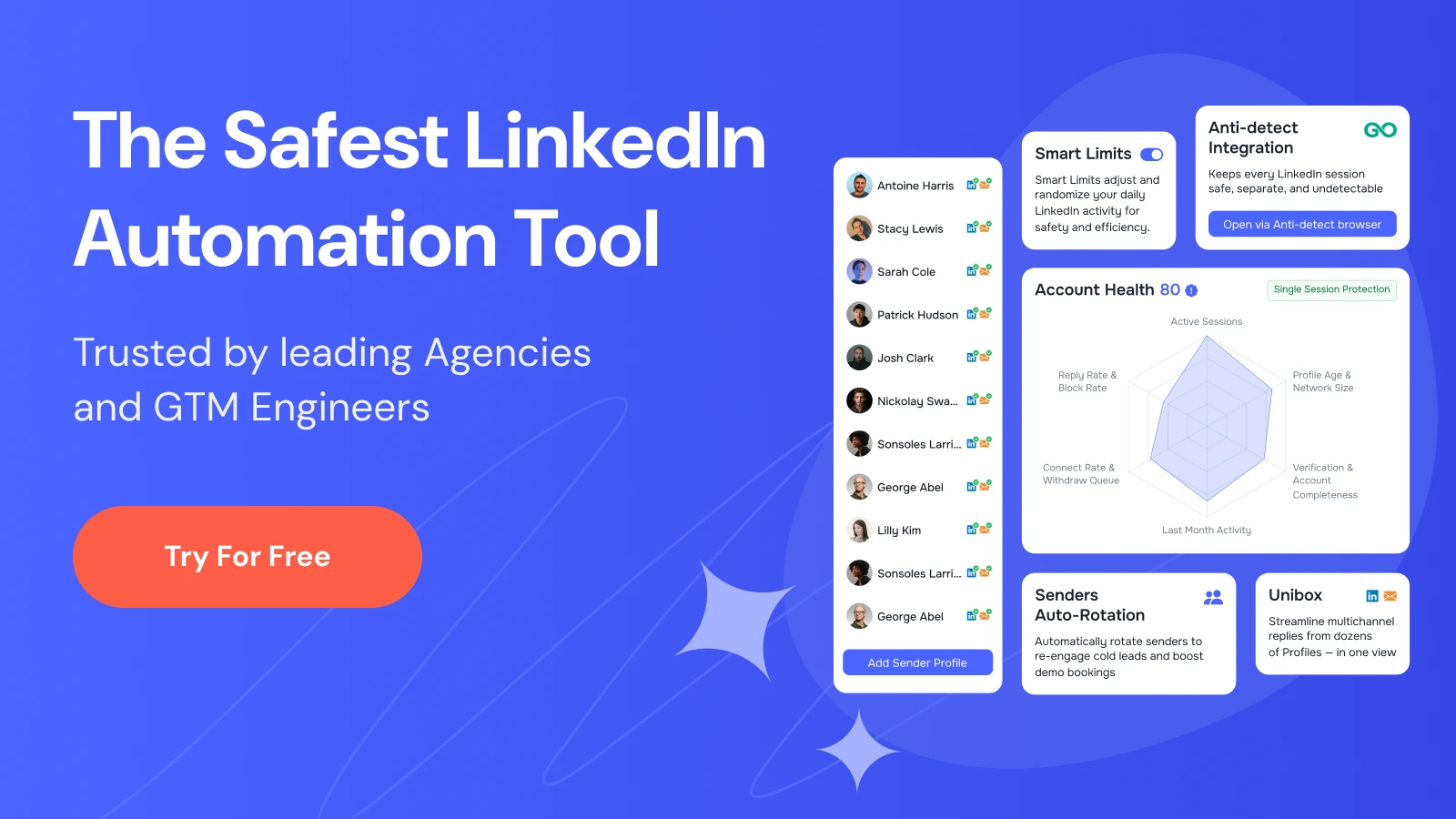
One of the most compelling insights from industry insiders is the accelerating shift toward true omnichannel automation. In this paradigm, tasks are no longer siloed within individual platforms but flow seamlessly and intelligently across various communication channels. For instance, a successful LinkedIn connection request can automatically trigger a personalized email follow-up, with both interactions meticulously logged and tracked within a unified CRM dashboard. This not only dramatically improves engagement rates — with personalized sequences yielding up to 62% higher response rates — but also critically addresses safety concerns inherent in scaled automation. Platforms emphasizing single-session protection and identity management, like what we offer at GetSales.io, play a pivotal role in reducing LinkedIn ban rates by intelligently rotating sender profiles, mimicking human behavior, and maintaining strict compliance with platform policies. This proactive approach ensures sustainable, high-volume outreach without jeopardizing valuable accounts.
Statistics further highlight the critical stakes involved: Without mobile CRM access, a mere 22% of SDRs consistently hit their quotas, a stark contrast to the 65% who achieve quota attainment when equipped with robust mobile capabilities. Professional advice from leading sales executives consistently stresses the importance of strategic time-blocking techniques, such as the widely adopted 60/25/15 rule — allocating 60% of time to prospecting, 25% to qualifying, and 15% to administrative tasks — to effectively leverage these advanced tools. Recent news from Gartner notes that by 2026, an overwhelming 55% of sales teams will prioritize deep LinkedIn and email integrations for multi-threaded outreach, a trend significantly driven by AI's proven ability to enhance forecasting accuracy by an astounding 42% (as detailed in reports like those found on gartner.com).
💡 Tip: Start your day by reviewing AI-prioritized tasks in your CRM. This strategic approach allows you to tackle high-impact activities first, potentially reclaiming 15-20% of your time for actual selling and direct engagement with hot leads.
Comparing Top CRM Tools for Task Management
When evaluating CRM options for task management, SDRs and their leaders need tools that excel in automation, integration capabilities, and scalability, particularly for high-volume outbound work and complex Account-Based Outreach strategies. This section provides a detailed CRM task management comparison for SDRs, breaking down some leading platforms based on their features, pros, cons, and overall suitability for modern SDR workflows in 2026. This comparison draws from extensive productivity benchmarks, where automated task systems have been consistently shown to accelerate revenue growth by up to 29% through superior lead handling and optimized follow-up processes.
Here's a side-by-side look at key players, focusing on their task management capabilities for SDRs:
|
CRM Tool |
Key Task Management Features for SDRs |
Pros for SDRs |
Cons for SDRs |
Pricing (2026 Starting Point) |
|---|---|---|---|---|
|
Salesforce |
AI-driven workflows (Einstein), revenue alerts, pipeline automation, Slack integrations for real-time updates, robust reporting |
Highly scalable for enterprise teams; unparalleled analytics for tracking SDR performance and forecasting |
Complex setup and customization can lead to tab-switching friction; requires extensive add-ons for seamless multichannel outreach |
Professional plans from $75/user/month, Enterprise tiers significantly higher |
|
HubSpot |
Lead sequences, automation for emails and tasks, multichannel support with free CRM core, built-in meeting scheduler |
User-friendly for startups and SMBs; easy adoption with built-in segmentation for targeted outreach; strong content integration |
Limited native dialing features; may need integrations for advanced phone tasks; advanced automation can get costly |
Freemium model, paid tiers from $20/user/month |
|
Pipedrive |
Visual deal pipelines, activity reminders, basic automations for follow-ups and assignments, customizable activity types |
Intuitive and highly visual for outbound-focused SDRs; affordable for small teams scaling prospecting; strong mobile app |
Lacks advanced AI compared to leaders; basic for complex enterprise needs and deep multichannel automation |
From $14/user/month |
|
Close |
Native power dialer, auto-logging for calls/emails/SMS, dynamic smart views for task prioritization, predictive dialing |
Maximizes talk time by saving 1-2 hours daily; ideal for phone-heavy SDR roles; zero-tool-switching design for efficiency |
Enterprise features like predictive dialing are premium; less emphasis on LinkedIn safety and advanced Account-Based Outreach |
From $29/user/month |
|
Zoho CRM |
Lead scoring, mobile workflows, no-code automations for assignments and triggers, strong multichannel integration |
Cost-effective with robust features for B2B lead enrichment; good for teams needing customization on a budget |
Steeper learning curve for custom setups; not as polished or intuitive for high-volume, AI-driven automation compared to top-tier solutions |
From $14/user/month |
|
GetSales.io |
Unified Inbox, Rotating Sender Profiles, Single Session LinkedIn Protection, Account-Based Outreach, SDR CRM with Tasks, LinkedIn Import & Enrichment, Email Automation, Analytics |
Unmatched LinkedIn safety and compliance; ideal for high-volume, multichannel Account-Based Outreach; unified management of multiple identities; cost-effective scaling |
Primarily focused on LinkedIn and email outreach; may require integration with a broader CRM for full sales pipeline management beyond SDR scope |
From $59/month |
From this comprehensive table, Close stands out for SDRs heavily involved in inside sales due to its zero-tool-switching design and powerful native dialer. Salesforce, with its AI monitoring and vast ecosystem, continues to dominate in enterprise settings where deep customization and extensive reporting are paramount. However, for teams specifically focused on high-volume, LinkedIn-heavy outreach and sophisticated Account-Based Outreach strategies, tools like ours at GetSales.io integrate task management with unique features such as rotating sender profiles and single-session protection. This offers superior stability and ban rate reductions — achieving up to 843% better outcomes in some benchmarks compared to less secure automation tools.
Unique insights reveal that integration quality is not just important, it's paramount. CRMs with seamless LinkedIn import and enrichment capabilities, such as GetSales.io's features, directly improve lead quality and targeting accuracy, which are critical for effective Account-Based Outreach. Expert quotes consistently emphasize this; as one sales consultant noted in a Harvard Business Review piece, "AI as an always-on assistant is transforming task prioritization, delivering 42% gains in forecasting by 2026" (hbr.org). This highlights the strategic imperative of choosing tools that leverage AI not just for data analysis, but for actionable task management.
In real-world scenarios, many lead generation agencies using Pipedrive report significant 50% reductions in administrative time, but they often pair it with specialized add-ons for full multichannel support, especially for LinkedIn. Conversely, HubSpot's free tier appeals strongly to founders of nascent lead gen agencies seeking cost-effective options, though it may fall short on advanced safety protocols required for truly scaled, compliant LinkedIn automation.
⚠️ Warning: Avoid over-relying on basic CRMs without robust safety features for LinkedIn tasks. This can dramatically spike ban rates and lead to costly account restrictions. Always opt for platforms with proven compliance and advanced protection mechanisms like GetSales.io's LinkedIn safety protocols.
Best Practices for SDR Task Management
To truly maximize the potential of CRM task management, SDRs must adopt structured, forward-thinking approaches that align with 2026's emphasis on AI, multichannel efficiency, and Account-Based Outreach. Here are actionable steps to implement for superior performance:
- Assess Your Team's Specific Needs and Volume: Begin by thoroughly evaluating your team's daily outreach volume and the complexity of your sales process. Are you engaged in high-volume outbound prospecting? Then prioritize tools with robust omnichannel automation, including deep LinkedIn and email integration, capable of handling hundreds of touches daily without requiring manual logging or constant supervision. Consider the nuances of your target market and whether Account-Based Outreach is a core strategy, as this will influence the required features for personalization and account-level tracking.
- Set Up Intelligent Automation Rules: Configure precise triggers for automated tasks. For example, automatically assign a follow-up task after a prospect views your LinkedIn profile, opens an email, or interacts with a specific piece of content. Such timely, automated responses can significantly improve response rates by up to 62% and ensure no hot lead is ever missed due to manual oversight.
- Incorporate AI-Driven Prioritization: Leverage dynamic task reordering capabilities to ensure SDRs consistently focus on the hottest, most engaged leads first. Tools like Salesforce's Einstein or GetSales.io's intelligent task queues excel here, ensuring that tasks adapt in real-time based on lead behavior and engagement signals. This proactive approach ensures that high-impact activities are always at the top of an SDR's list.
- Integrate with Comprehensive Analytics: Don't just track activity; track outcomes. Integrate your CRM task management with robust analytics to monitor key metrics such as activity rates, conversion rates at each stage, and win percentages. This data is crucial for refining workflows, identifying bottlenecks, and optimizing your outreach strategies. Aim for greater than 90% data hygiene to avoid forecasting errors and ensure reliable insights.
- Test, Iterate, and Optimize Continuously: The sales landscape is dynamic. Regularly run A/B tests on different task sequences, messaging variations, and follow-up cadences, similar to optimizing drip campaigns. Monitor for compliance with platform policies and data privacy regulations (like those from the FTC, ftc.gov), while optimizing for conversions. Continuous iteration ensures your processes remain efficient and effective.
Professional advice from industry insiders consistently suggests standardizing follow-up processes for a potential 78% conversion boost. For GTM engineers and VPs at IT firms, focusing on low-ban-rate tools is absolutely critical; our platform at GetSales.io, with its identity renting and unified inbox, specifically supports this by enabling safe, scalable outreach without compromising account integrity.
Recent trends further highlight mobile access as a true game-changer, with 65% quota attainment for users who have it, versus a mere 22% for those without. Government guidelines on data privacy, such as those from the FTC (ftc.gov), underscore the non-negotiable need for compliant logging and secure data handling within CRMs to protect sensitive lead information.
📌 Note: For maximum efficiency, combine intelligent CRM task management with disciplined time-blocking. Dedicate your mornings to prospecting via automated sequences and targeted manual touches to effectively hit that crucial 60% allocation for revenue-generating activities.
Common Mistakes to Avoid
SDRs and sales leaders often encounter significant hurdles when implementing CRM task management, leading to widespread inefficiencies and missed opportunities. Recognizing and avoiding these common pitfalls is crucial for maximizing productivity and achieving quota attainment.
- Ignoring Data Hygiene: This is perhaps the most frequent and damaging error, affecting an estimated 63% of firms. Neglecting data hygiene leads directly to inaccurate lead scoring, misdirected outreach, and ultimately, wasted effort. Always prioritize cleaning and enriching your database quarterly, if not more frequently, to ensure the integrity of your lead data.
- Over-Customizing Without Proper Testing: While customization can be powerful, over-customizing a CRM without thorough testing often leads to unforeseen bugs, workflow disruptions, and user frustration. Start with a simpler, proven configuration and gradually scale your customizations, testing each change rigorously before full deployment.
- Failing to Integrate Multichannel Outreach Properly: Treating LinkedIn, email, and other channels as siloed entities is a recipe for reduced engagement and fragmented lead intelligence. Not integrating multichannel outreach effectively means SDRs miss out on the synergistic power of unified campaigns. This often results in lower response rates and a disjointed prospect experience.
- Neglecting LinkedIn Safety Protocols: For teams leveraging LinkedIn automation, a critical mistake is not using advanced safety features like rotating profiles, single-session protection, and human-like delays. This oversight dramatically heightens ban risks — a mistake that costs teams dearly in terms of lost accounts, wasted time, and damaged reputation. Platforms like GetSales.io specifically address this with robust safety measures.
- Overlooking Mobile Optimization: In today's mobile-first world, failing to provide SDRs with a fully optimized mobile CRM experience means they miss out on that crucial 65% quota attainment edge. SDRs need to be able to manage tasks, log activities, and respond to leads on the go.
- Neglecting Analytics and Performance Tracking: Relying solely on activity metrics without tracking actual outcomes (e.g., conversion rates, pipeline generated) is a common pitfall. This leads to unbalanced metrics and a lack of actionable insights. Without proper analytics, teams can waste up to 32% of their time on manual entry and inefficient processes, failing to identify what truly drives results.
By consciously steering clear of these prevalent mistakes, sales development teams can fully unlock the impressive 26.4% productivity lift promised by advanced CRM task management tools, ensuring more efficient workflows and higher quota attainment.
Expert Insights and Real-World Examples
Experts universally agree that sophisticated CRM task management is not merely beneficial but absolutely pivotal for SDR success in the competitive landscape of 2026. "CRM automation reclaims 15-20% of an SDR's time, directly boosting revenue by 29%," states a compelling report from The Bridge Group, emphatically highlighting the industry's decisive shift towards AI-driven, intelligent systems (bridgegroupinc.com).
In a compelling real-world example, a rapidly growing lead generation agency successfully integrated GetSales.io's advanced task management features with its omnichannel outreach sequences. This strategic move resulted in a remarkable 50% reduction in administrative time for their SDRs, allowing them to scale their outreach safely and effectively across hundreds of accounts. Frédéric D, Co-founder of MirrorProfiles, a prominent agency, enthusiastically shared: "GetSales is 10x safer than any other tool we've tested. Its single-session protection and rotating profiles are game-changers for our LinkedIn campaigns." This powerful testimonial directly aligns with Gartner's insights on cutting non-selling time by a staggering 66% through deep CRM and sales engagement integrations (as reported on gartner.com).
Another illustrative case involves an enterprise IT firm that initially switched to Salesforce for its robust AI-driven workflows and extensive reporting capabilities, which helped shorten their sales cycles by 14%. However, to specifically address the unique challenges of high-volume LinkedIn prospecting and Account-Based Outreach, they strategically integrated GetSales.io. This dual approach allowed them to leverage Salesforce for overall pipeline management while utilizing GetSales.io for its unparalleled LinkedIn safety protocols and unified inbox, effectively minimizing ban rates during their most aggressive outbound campaigns. This hybrid strategy exemplifies how specialized tools can augment broader CRM platforms for optimal performance.
💡 Tip: To ensure fair workload distribution and prevent SDR burnout, leverage expert-recommended round-robin assignments within your CRM. This ensures an even distribution of new leads and tasks across your team, fostering a more balanced and productive environment.
FAQ
What makes CRM task management essential for SDRs in 2026? It's essential because it automates repetitive administrative tasks, freeing up significant time for actual selling. This leads to an average productivity improvement of 26.4% through AI prioritization, dynamic lead assignment, and seamless multichannel integration, which are critical for high-volume outbound.
How do CRM tools handle LinkedIn safety for outbound prospecting? Advanced CRM platforms, especially those specialized in LinkedIn outreach like GetSales.io, use sophisticated features such as rotating sender profiles, single-session access, and anti-detect browser technology. These measures significantly reduce ban rates and ensure compliance with LinkedIn's policies, making scaled outreach safer and more sustainable. Check out GetSales.io's safety features for best practices.
Which CRM is best for cost-effective multichannel Account-Based Outreach? While options like Zoho CRM offer a cost-effective starting point, GetSales.io excels in providing a highly specialized and cost-effective solution for LinkedIn-email combinations, particularly for agencies and B2B teams focused on Account-Based Outreach. Its unified inbox and identity management features offer superior value for scaled, compliant multichannel campaigns, with plans starting at just $59 per month.
Can CRM task management integrate with existing sales tools? Yes, most modern CRM systems are designed to support extensive third-party integrations. This allows for enhanced automation, data synchronization, and a unified workflow across your entire sales tech stack, boosting follow-up efficiency by up to 62% and streamlining operations.
What are the risks of poor task management in CRMs? Poor task management leads to numerous risks, including missed leads, longer sales cycles, inaccurate data, and significantly higher ban rates in automated outreach. It can result in up to 32% of an SDR's time being wasted on manual administrative tasks, directly impacting quota attainment and overall team performance.
How does AI impact SDR task management? AI profoundly impacts SDR task management by providing dynamic task reordering, intelligent lead scoring, and hyper-personalization capabilities. It ensures SDRs focus on the most promising leads at the optimal time, with projections indicating a 42% gain in forecasting accuracy by 2026 due to AI-driven insights (hbr.org).
Ready to Transform Your SDR Workflow?
If you're a GTM engineer, an agency founder, or a sales leader ready to scale your outbound prospecting safely and efficiently, it's time to explore how GetSales.io's specialized CRM with advanced task management can revolutionize your outreach. Our platform uniquely combines automated workflows, a powerful unified inbox, and top-tier LinkedIn safety protocols — including Account-Based Outreach capabilities and identity renting — to drive conversions without the inherent risks of traditional automation.
Ready to see it in action? Don't just read about it, click play and watch how GetSales.io empowers your team. Schedule a personalized demo today at this link or visit GetSales.io to get started. Our plans begin at just $59 per month, offering an unparalleled blend of safety, scalability, and performance. Don't let outdated tools and inefficient processes hold your team back; step into efficient, compliant, and highly effective sales automation now.