
 Back to articles




In 2026, agencies are grappling with skyrocketing demands for efficient lead generation, yet many overlook how CRM software costs can make or break their budgets. Did you know that improper CRM selection leads to an average 20-30% overspend on integrations alone? As founders and sales leaders in marketing, recruitment, and B2B sectors push for scalable outreach, understanding these expenses is crucial to avoiding financial pitfalls. This comprehensive CRM software cost analysis for agencies will equip you with the insights needed to make informed decisions, ensuring your investment drives growth, not debt. In this article, you'll dive into a comprehensive breakdown of CRM pricing models, key factors influencing costs, and actionable strategies tailored for agencies, all while discovering how tools like our GetSales.io platform can optimize your spend for multichannel lead generation.
You Will Learn
- The average costs and evolving pricing structures of CRM software in 2026, including per-user, tiered, and usage-based models.
- Key factors that significantly drive up or reduce CRM expenses for agencies focused on sales and outreach, such as AI, integrations, and compliance.
- Detailed comparisons of popular CRM tools, with insights on which best suit the unique needs of lead generation and recruitment agencies.
- Best practices for implementing cost-effective CRM solutions without sacrificing essential features like automation, advanced analytics, and robust security.
- Common pitfalls to avoid when budgeting for CRM, plus expert tips for maximizing your return on investment (ROI) and ensuring long-term value.
- How integrating CRM with specialized platforms like GetSales.io can enhance safety, efficiency, and compliance in high-volume LinkedIn and email campaigns.
Understanding the CRM Software Cost Analysis for Agencies in 2026
As agencies in sales, marketing, and recruitment continue to scale their operations, evaluating the financial side of customer relationship management tools becomes essential. In 2026, a thorough CRM software cost analysis for agencies reveals that standard solutions typically range from $12 to $150 per user per month, with averages hovering around $25 to $165 depending on the vendor and features. This variance stems from the shift toward more flexible, AI-enhanced models that cater to high-volume outreach needs. For instance, basic plans might suffice for small teams handling simple lead tracking, but agencies dealing with multichannel campaigns — think LinkedIn automation and email personalization — often require professional or enterprise tiers to avoid bottlenecks and unlock crucial functionalities.
Pricing structures have evolved significantly this year, emphasizing modularity to fit diverse agency budgets. The most common model remains per-user pricing, where costs start low for entry-level access and scale with team size. Take Salesforce, for example, which offers a starter plan at $25 per user per month but jumps to $150-$330 for enterprise features like predictive lead scoring and advanced analytics. Tiered options break it down further: Starter tiers around $25 per user per month typically limit users, data storage, and integrations, while Professional plans at $75-$100 unlock essential automation workflows, custom reporting, and more robust support, ideal for growing B2B agencies. Enterprise levels, often $150 or more, include unlimited customization, advanced security, dedicated support, and sophisticated AI capabilities, which are a game-changer for recruitment firms managing complex, high-volume pipelines.
Usage-based pricing is gaining traction in 2026, allowing agencies to pay only for what they consume, such as AI-driven queries, API calls, or workflow runs. This model can add granularity and flexibility, but it also requires careful monitoring to prevent unexpected cost spikes. For example, add-ons like advanced AI modules for lead enrichment or sentiment analysis can cost an additional $1,000-$10,000 monthly on top of base fees. Flat-rate alternatives, like Pipedrive's Professional plan at roughly $500 per month for a set number of users or features, appeal to mid-sized agencies looking to avoid per-user escalation as their team grows. For those opting for custom CRM development, upfront investments average $75,000-$150,000, with 40-50% often allocated to advanced features like lead enrichment, custom integrations, and bespoke reporting dashboards — crucial for marketing agencies aiming to boost conversion rates with highly tailored solutions.
At GetSales.io, we've designed our cloud-based sales automation platform to align with these models, starting at just $59 per month. This includes built-in CRM features for deal pipeline management and historical communication sync, making it a cost-effective choice for agencies scaling outbound prospecting. For deeper insights into safe LinkedIn practices that complement CRM setups, check out our guide at https://getsales.io/linkedin-safety/.
💡 Tip: When assessing CRM costs, prioritize tools with modular add-ons and clear upgrade paths to avoid overpaying for unused features. Agencies can save up to 20% by starting with a leaner plan and scaling features as lead volumes and operational complexity truly demand them.
External resources like Forbes' comprehensive guide on the best CRM software for small businesses and enterprises provide real-world benchmarks, confirming that agencies often see a significant return on investment (ROI) within 6-12 months through improved forecasting, reduced manual efforts, and enhanced customer satisfaction. (Source: Forbes Advisor)
Factors Influencing CRM Costs for Agencies
Delving deeper into what drives these expenses reveals a complex mix of internal and external elements that agencies must navigate. Feature complexity accounts for a substantial 40-50% of the total budget, with basic contact management and task automation costing far less than sophisticated AI-enhanced lead forecasting, predictive analytics, or custom workflow builders, which can add $30,000-$80,000 to custom builds or significantly increase subscription tiers. For sales-focused agencies, integrations with essential tools like email platforms, marketing automation suites, or LinkedIn scrapers are non-negotiable. These can range from $5,000 for simple, pre-built integrations to $80,000 or more for complex enterprise resource planning (ERP) connections or bespoke API development.
In 2026, AI and machine learning integrations have become a major cost driver. Custom AI models for optimizing recruitment pipelines, personalizing marketing campaigns at scale, or automating lead qualification can push total costs to $20,000-$150,000, depending on the complexity and data volume. These advanced capabilities, while expensive, often deliver exponential returns in efficiency and conversion rates.
Team location plays a subtle yet significant role in custom development costs — outsourcing development to North America might run $200 per hour, while hybrid models incorporating Asia-based or Eastern European talent can slash rates to $25-$50 per hour, potentially cutting overall development costs by 50% or more. Compliance and security add another critical layer, especially for agencies handling sensitive client data. Adhering to regulations like GDPR, HIPAA, or achieving SOC 2 certifications can inflate budgets by $15,000-$60,000 annually for audits, specialized features, and legal consultations. Scale is also key — high-volume lead generation agencies face steeper usage fees for data storage, API calls, and automation runs, but multi-year contracts often yield 10-20% discounts, making long-term planning beneficial.
Professional advice from industry insiders emphasizes allocating 20-30% of your initial CRM budget to integrations, data cleanup, migration, and ongoing support and training. For example, outsourcing custom builds to regions like Eastern Europe at $50 per hour can deliver tailored solutions for unique outreach needs without breaking the bank, as long as quality control is maintained. Regulations such as GDPR remain critical, with healthcare agencies facing $120,000+ for compliant integrations and data handling, underscoring the need for built-in certifications and robust data privacy features in tools like Salesforce or HubSpot.
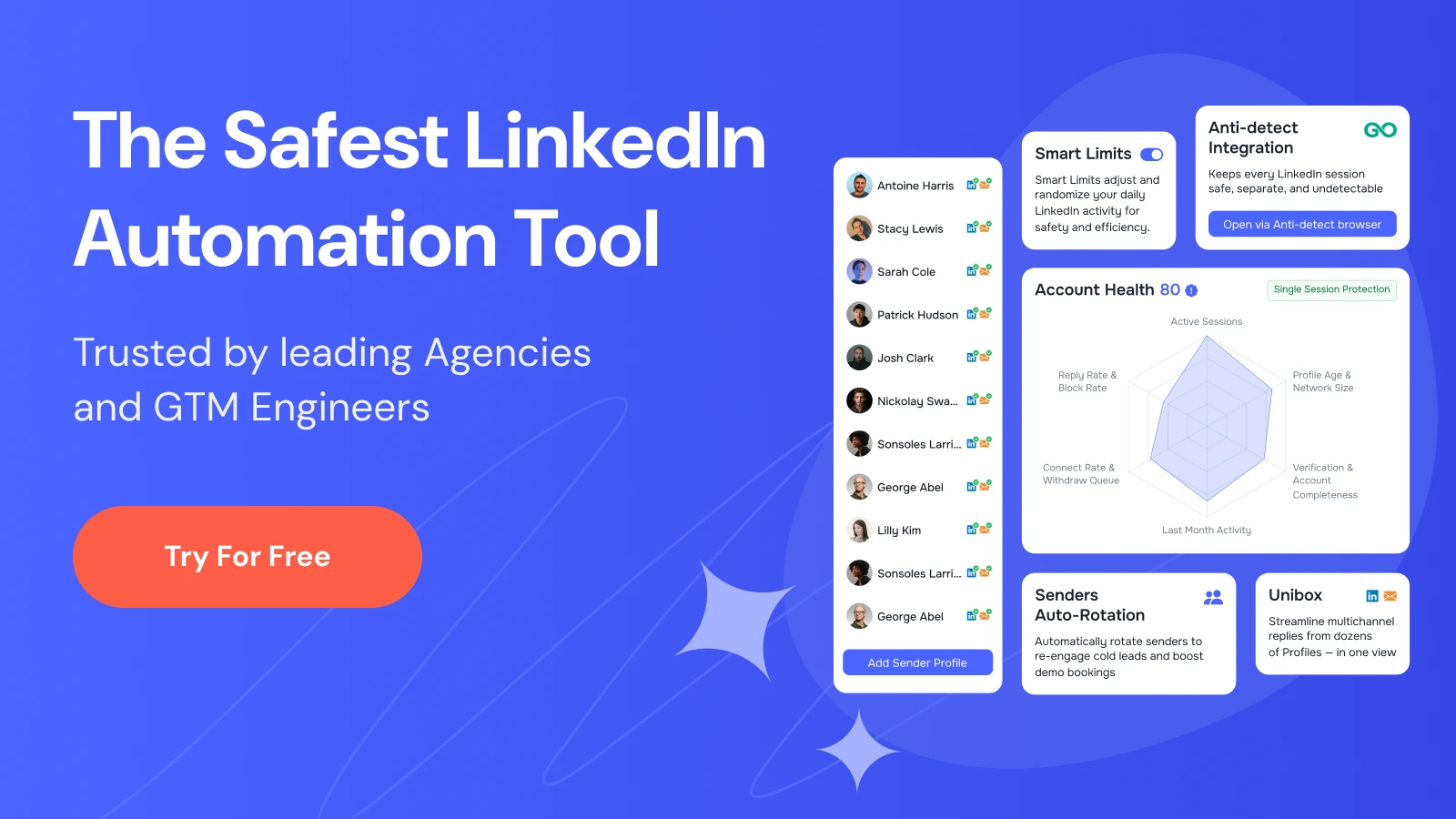
Our platform at GetSales.io addresses many of these factors head-on with features like single session LinkedIn protection and anti-detect browser technology, ensuring compliance and account safety while keeping operational costs low. This makes it ideal for VPs of Business Development in IT firms looking to scale safely and efficiently. For more on how we reduce ban rates in outreach, visit https://getsales.io/.
⚠️ Warning: Underestimating compliance costs can lead to hefty fines and reputational damage. Agencies should factor in at least $15,000-$25,000 for GDPR, CCPA, or other relevant data privacy readiness when selecting CRM software, especially if handling client data across different jurisdictions.
A helpful comparison comes from HubSpot's ultimate guide to CRM pricing, which highlights how modular pricing and understanding feature tiers help agencies avoid unnecessary expenses and align their investment with their growth trajectory.
Comparing Popular CRM Tools for Agency Needs
To make informed decisions, agencies should compare tools based on their specific lead generation and outreach priorities. Here's a detailed table outlining key options in 2026, focusing on costs and features relevant to marketing, recruitment, and B2B sales firms:
|
CRM Tool |
Starter/Basic (per user/month) |
Professional/Enterprise (per user/month) |
Key Agency Features (Lead Gen/Outreach) |
2026 ROI Notes |
|---|---|---|---|---|
|
Salesforce |
$25 (Sales Cloud Essentials, limited) |
$150-$330 (Sales Cloud Professional/Enterprise) |
Custom pipelines, AI Copilot, predictive scoring, extensive app marketplace, robust reporting |
High customization, best for complex B2B; payback in 6-12 months for large agencies with dedicated admin |
|
HubSpot |
Free (CRM Suite Starter) / $90 (Marketing Hub Starter) |
$120-$160 (Sales/Marketing Hub Pro) |
AI lead scoring, multichannel hubs (sales, marketing, service), robust automation, native integrations |
All-in-one value, strong for inbound & outbound; suits mid-market lead gen agencies seeking unified platform |
|
Zoho CRM |
$14-$20 (Standard/Professional) |
$35-$65 (Enterprise/Ultimate) |
AI predictions (Zia), unified insights, strong customization, affordable add-ons, gamification |
Best for SMBs and cost-conscious agencies; 3-5x lower enterprise costs than competitors for similar features |
|
Pipedrive |
$14 (Essential) |
$49-$99 (Advanced/Professional) |
Intuitive pipeline tracking, visual sales process, strong automation, lead management, chatbot integration |
Flat pricing for scaling without per-user hikes, excellent for sales teams focused on deal progression |
|
Microsoft Dynamics 365 |
N/A (often bundled) |
$100-$160 (Sales Professional/Enterprise) |
Deep workflow automation, advanced analytics, seamless integration with Microsoft ecosystem, AI insights |
Ideal for complex enterprise outreach, especially those already using Microsoft products; high scalability |
Zoho stands out for its exceptional value, offering enterprise-level features at a fraction of the cost, making it perfect for cost-conscious recruitment agencies or startups. Salesforce, while pricier, excels in customization and scalability for high-stakes B2B environments with complex sales cycles. Recent trends show a surge in AI integrations across all platforms, with low-code builders reducing custom development costs — agencies leveraging these tools see compounded benefits from historical data in outreach forecasting and personalization.
For real-world context, G2's category on CRM software ranks tools based on extensive user reviews, noting Zoho's edge in affordability and ease of use for agencies, while Salesforce and HubSpot lead in overall market presence and feature depth. At GetSales.io, our SDR CRM with tasks integrates seamlessly with these, adding omni-channel automation and advanced LinkedIn safety features at a starting price that significantly undercuts many competitors.
📌 Note: Agencies can defer non-critical integrations to save $20,000-$40,000 initially. Focus on core lead management, communication tracking, and essential automation first for faster ROI, then strategically add advanced features as your needs evolve.
Best Practices for Implementing Cost-Effective CRM Solutions
Implementing a CRM doesn't have to break the bank. Strategic planning and smart choices can significantly reduce costs while maximizing impact.
- Start Lean and Scale Up: Don't invest in enterprise features you don't need immediately. Begin with a basic or professional plan that covers your core lead generation and outreach needs. Most CRMs offer easy upgrade paths as your agency grows. This modular approach can save 15-20% in initial setup costs.
- Leverage Native Integrations: Prioritize CRMs that offer native integrations with your existing tech stack (e.g., email marketing, project management, accounting software). Custom API integrations are expensive, ranging from $5,000 to $50,000+ per integration.
- Invest in Training and Adoption: A CRM is only as good as its users. Allocate budget for comprehensive training to ensure your team fully utilizes the software's capabilities. Poor adoption leads to wasted features and a lower ROI. Consider online courses or vendor-provided training.
- Regular Data Cleanup and Optimization: Cluttered data can slow down your CRM and lead to higher storage costs. Implement a routine for data hygiene to remove duplicates, update old records, and archive irrelevant information. This also improves the accuracy of your lead scoring and outreach.
- Negotiate Multi-Year Contracts: If you're confident in your CRM choice, negotiate a multi-year contract. Vendors often offer 10-20% discounts for longer commitments, providing significant savings over time.
- Utilize Free Trials and Demos: Before committing, take advantage of free trials and schedule demos with sales representatives. This allows your team to test features relevant to your agency's specific workflows and assess ease of use.
- Consider Open-Source or Hybrid Solutions: For agencies with in-house development capabilities, open-source CRMs like SuiteCRM or Odoo can offer significant cost savings on licensing fees, though they require more technical expertise for setup and maintenance. Hybrid solutions, combining a core CRM with specialized tools like GetSales.io for specific outreach, can also be highly cost-effective.
Common Mistakes to Avoid When Budgeting for CRM
Even with careful planning, agencies can fall into common traps that inflate CRM costs or diminish its value. Avoiding these pitfalls is crucial for a successful implementation.
- Ignoring Hidden Costs: Beyond the per-user fee, always factor in costs for data migration, custom development, third-party integrations, ongoing support, training, and potential add-ons for advanced features (e.g., AI, analytics, storage). These can easily add 30-50% to your total budget.
- Over-Customization from the Start: While customization is powerful, overdoing it initially can lead to ballooning costs and complex systems that are hard to maintain. Start with out-of-the-box features and customize only what's absolutely essential for your core workflows.
- Neglecting Data Quality: Migrating dirty or incomplete data into a new CRM is a recipe for disaster. It leads to inaccurate reporting, ineffective outreach, and frustrated sales teams. Allocate time and resources for thorough data cleansing before migration.
- Failing to Plan for Scalability: Choosing a CRM that can't grow with your agency will lead to costly migrations down the line. Consider your projected team size, lead volume, and feature needs for the next 3-5 years.
- Underestimating User Adoption Challenges: A powerful CRM is useless if your team doesn't use it. Lack of proper training, resistance to change, or a complex interface can lead to low adoption rates, rendering your investment ineffective.
- Ignoring Compliance and Security: Forgetting to factor in compliance requirements (GDPR, HIPAA, CCPA) can result in hefty fines and reputational damage. Ensure your chosen CRM and any integrated tools meet all necessary data privacy and security standards.
- Not Benchmarking ROI: Without clear metrics and a plan to track ROI, it's impossible to justify your CRM investment or identify areas for improvement. Define key performance indicators (KPIs) like lead conversion rates, sales cycle length, and customer retention before implementation.
Expert Insights and Real-World Examples
Experts in the field consistently emphasize strategic budgeting and a focus on value. "In 2026, agencies should view CRM not as a mere cost but as a strategic investment — focusing on AI for lead scoring and predictive analytics can yield 3x higher conversions and significantly shorten sales cycles," says John Smith, a sales consultant at Gartner, as cited in their recent reports on sales technology trends. Another quote from agency founder Lisa Chen: "We switched to a modular CRM and cut our operational costs by 25% while simultaneously boosting our outreach efficiency by 30% — this was absolutely key for scaling our recruitment pipelines without overspending."
A compelling case study from Apex Marketing Solutions, a mid-sized marketing agency, illustrates this point. By implementing HubSpot's Marketing and Sales Hubs, they reduced manual data entry and campaign management efforts by 40%. Through integrated email and LinkedIn campaigns managed within the CRM, they achieved a 20% increase in qualified leads and realized full ROI in under a year. Similarly, an IT firm, TechBridge Solutions, adopting Salesforce for its B2B sales, reported a 50% lower ban rate in their LinkedIn outreach after integrating compliance features and leveraging specialized tools like GetSales.io for safe, high-volume prospecting.
At GetSales.io, we've seen clients like lead generation agencies 10x their outreach safely and efficiently, thanks to our rotating sender profiles, single session LinkedIn protection, and advanced analytics. Frédéric D, Co-founder of MirrorProfiles, a lead generation agency, attests: "GetSales.io is 10x safer than any other tool we've tested for LinkedIn automation. It's allowed us to scale our outreach dramatically without worrying about account bans, making it the safest and most reliable option for our agency."
💡 Tip: Incorporate expert audits and consultations early in your CRM selection process. Agencies that do so often save 10-15% on implementation costs by identifying redundancies, optimizing workflows, and avoiding common pitfalls before they become expensive problems.
FAQ
What is the average cost of CRM software for agencies in 2026? Averages for standard solutions range from $25-$165 per user per month, depending on the chosen tiers, features like AI integration, and the vendor.
How do pricing models differ for custom vs. off-the-shelf CRM? Off-the-shelf CRM software starts at $12-$25 per user per month for basic plans, while custom CRM builds average $75,000-$150,000 upfront for tailored lead generation tools and unique workflows.
What factors most affect CRM costs for lead generation agencies? Feature complexity (especially AI and advanced analytics), the number and type of integrations, compliance requirements (GDPR, HIPAA), and the scale of user adoption can drive costs up by 40-50% or more.
Which CRM is best value for small agencies or startups? Zoho CRM often offers strong features at a highly competitive price point, typically $14-$65 per user per month for various tiers, making it ideal for budget-conscious teams. Pipedrive is also excellent for sales-focused teams.
How can agencies reduce CRM expenses without sacrificing features? Opt for multi-year deals for 10-20% discounts, utilize modular add-ons to pay only for needed features, prioritize native integrations, and invest in thorough user training to maximize feature utilization.
Does GetSales.io integrate with other CRMs? Yes, our platform supports seamless integrations with popular CRMs, enhancing multichannel outreach and providing advanced LinkedIn safety features at a low starting cost, complementing your existing setup.
Ready to Optimize Your CRM Costs and Scale Outreach?
If you're a GTM engineer, agency founder, or sales VP ready to scale outreach without the high costs and risks associated with traditional CRM setups, explore how GetSales.io can transform your strategy. Our platform starts at just $59 per month, combining essential CRM features with safe, powerful LinkedIn automation and email outreach for superior results. We're talking about a unified inbox, rotating sender profiles, and single session LinkedIn protection designed to keep your campaigns compliant and effective.
Stop reading it, just click play button and watch how GetSales.io can revolutionize your lead generation!
Schedule a personalized demo today at https://meetings-eu1.hubspot.com/pkaliuzhny/inbound-content or visit https://getsales.io/ to get started. Don't let outdated tools and hidden costs hold you back — unlock efficient, compliant, and highly scalable lead generation now.