
 Back to articles




Did you know that campaigns leveraging 3+ channels can achieve 287% higher purchase rates than single-channel strategies, transforming how B2B agencies like yours scale client conversions? In this article, we'll define multi-channel lead generation, explore its critical importance for modern sales, and show how our platform at GetSales.io empowers founders of lead generation agencies to automate and optimize LinkedIn and email outreach safely — delivering cost-effective, high-conversion results.
Defining Multi-Channel Lead Generation
Multi-channel lead generation is the strategic use of multiple coordinated outreach channels — such as email, LinkedIn, phone calls, ads, content, and events — to attract, engage, and convert prospects into qualified leads. Unlike single-channel approaches that rely on one method (e.g., email blasts alone), this method creates a diversified ecosystem where channels work in tandem, boosting visibility and response rates.
For B2B contexts, it means meeting decision-makers where they are: professionals might research via email but build trust on LinkedIn. According to HubSpot, multi-channel strategies differ from omnichannel by operating channels somewhat independently, while omnichannel integrates them for a seamless experience, often yielding up to 5x higher ROI HubSpot on Multichannel Marketing.
Why Multi-Channel Lead Generation Is Essential
In today's fragmented digital landscape, where adults juggle 8+ social media accounts and households manage 10+ connected devices, single-channel tactics fall short. Multi-channel lead generation is important because it addresses buyer journey complexity — requiring up to 13 touchpoints for conversion — and combats channel fatigue, like declining email open rates.
Key reasons it matters:
- Higher Conversions and ROI: Coordinated LinkedIn and email sequences deliver 3x better conversion rates than either alone, with overall multi-channel campaigns boosting ROI by nearly 5x Omnisend Multichannel Stats.
- Improved Lead Quality: By gathering data across channels (e.g., email opens, LinkedIn profile views), you gain richer intent signals for precise targeting.
- Risk Diversification: Over-reliance on one channel exposes you to deliverability issues or platform changes; multi-channel spreads the load.
- Buyer Preference Alignment: 86% of marketers report increasing effectiveness from multi-channel efforts, as they cater to varied preferences Demand Gen Report.
For agency founders, this approach maximizes client conversions by enabling scalable, personalized outreach — exactly what we facilitate at GetSales.io through our unified inbox and omni-channel automation.
Benefits for Lead Generation Agencies
As a founder focused on cost-effective multi-channel platforms, adopting multi-channel lead generation can differentiate your agency and drive higher retainers. Here's why it's a game-changer:
- Scalable Outreach: Combine LinkedIn's 10.3% average response rate (double email's 5.1%) with email automation for broader reach without burnout LinkedIn Sales Blog.
- Shorter Sales Cycles: Consistent messaging across channels builds familiarity faster, shortening cycles and improving client ROI.
- Data-Driven Optimization: Access analytics to refine strategies, like A/B testing drip campaigns, ensuring ultra-targeted efforts.
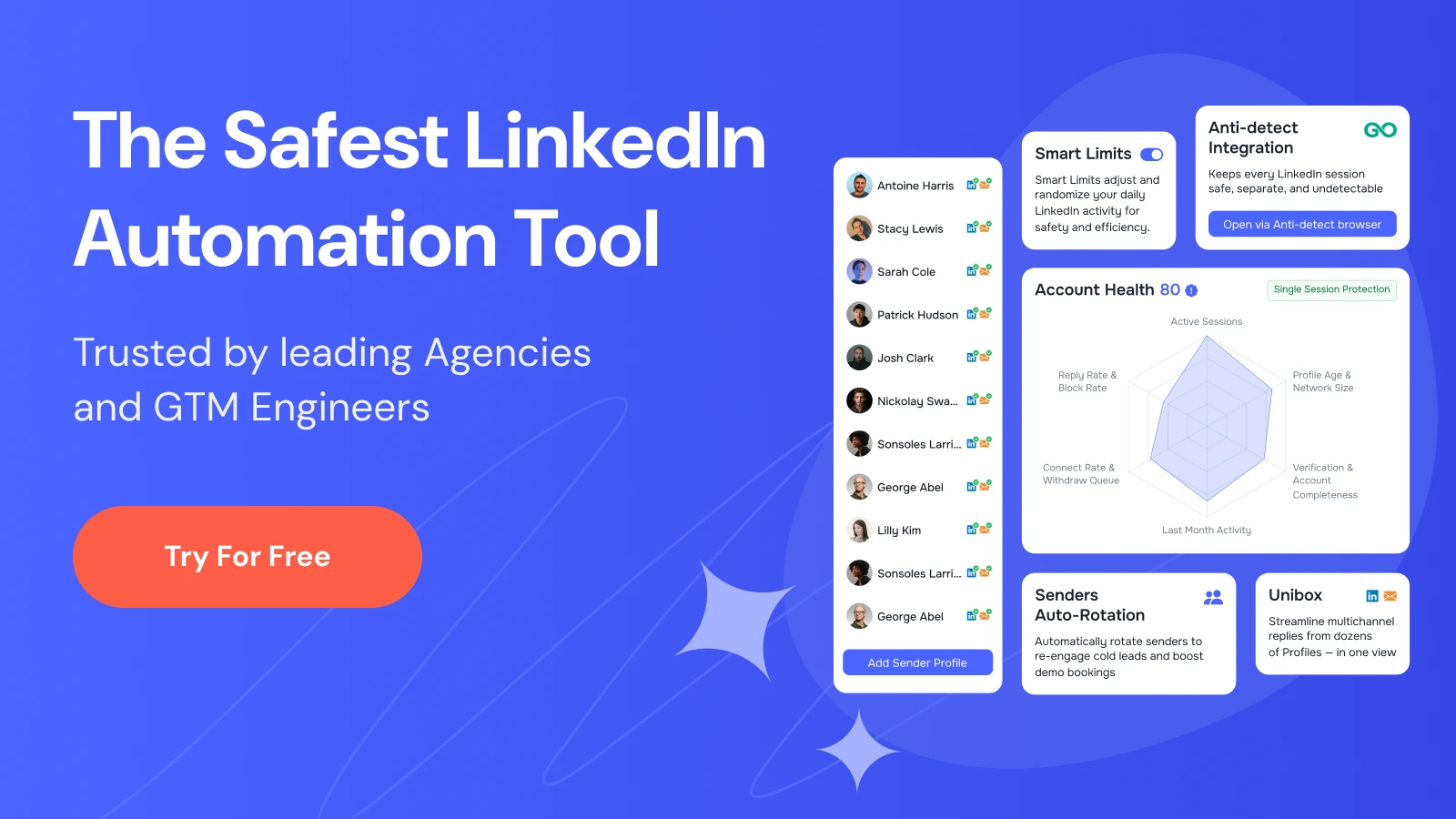
- Compliance and Safety: With regulations like GDPR requiring transparency and opt-outs, multi-channel tools must prioritize security — our LinkedIn Safety features use single-session protection to minimize ban risks.
Agencies using 4-6 channels see the best response rates, making this essential for B2B clients in IT and software Forrester Research.
Best Practices for Implementation
To harness multi-channel lead generation effectively:
- Map Your ICP: Identify where ideal clients engage — e.g., LinkedIn for networking, email for details.
- Design Integrated Sequences: Start with a cold email, follow with a LinkedIn connection, then a phone call; aim for 4-6 channels for optimal results.
- Personalize Per Channel: Tailor content — short and conversational on LinkedIn, in-depth in emails.
- Leverage Tools: Integrate CRM for tracking; at GetSales.io, our no-code builder automates sequences across LinkedIn, email, and SMS.
- Ensure Compliance: Follow CAN-SPAM for emails (include unsubscribe links) and GDPR for data handling, maintaining global suppression lists.
Expert quote: "Multi-channel isn't just about more touches — it's about smarter, data-driven engagement that respects buyer preferences," says marketing strategist Ann Handley Chief Content Officer.
Challenges and How to Overcome Them
While powerful, multi-channel lead generation brings complexities like tool sprawl and attribution confusion. Agencies often struggle with integrating platforms, but our unified dashboard at GetSales.io simplifies this, syncing communications and providing real-time analytics.
Overcome pitfalls by investing in AI for personalization and starting small — test LinkedIn-email combos before expanding. Recent news highlights growth: the multi-channel market is projected to reach $28.6B by 2030, underscoring its importance Grand View Research.
Ready to scale? Book a demo to see how we can help.
FAQ
What is the difference between multi-channel and omnichannel lead generation? Multi-channel uses independent channels, while omnichannel integrates them for a unified experience, often leading to 91% higher retention Omnisend.
Why is multi-channel lead generation important for B2B agencies? It diversifies risk, boosts conversions by 287% with 3+ channels, and enables personalized scaling, crucial for client success in competitive markets.
How does GetSales.io support multi-channel strategies? Our platform automates LinkedIn and email outreach with features like rotating senders and analytics, starting at $59/month — visit GetSales.io for details.
What regulations should I consider? Key ones include GDPR for data privacy, CAN-SPAM for emails, and LinkedIn's anti-spam policies; always prioritize opt-outs and transparency.
Can multi-channel lead generation reduce ban risks on LinkedIn? Yes, by rotating profiles and using single-session protection, as in our safety tools, minimizing restrictions while maximizing volume.