
 Back to articles




Did you know that SaaS companies can slash cloud costs by up to 60% through smart rightsizing and reserved instances, according to AWS insights? In this article, we'll explore proven strategies for optimizing cloud infrastructure for SaaS businesses, drawing on real-world data and expert advice to help co-founders of LinkedIn profile management and rental services cut costs, boost scalability, and enhance security — ultimately driving higher profits. From FinOps practices to auto-scaling techniques tailored for high-volume outreach, we'll cover key tactics, pitfalls, and actionable steps, all while highlighting how our cloud-based sales automation platform at GetSales.io exemplifies these optimizations for safe, efficient LinkedIn and email campaigns.
Understanding Cloud Optimization for SaaS Scalability
For SaaS businesses like ours, where we manage thousands of client LinkedIn profiles and automate multichannel outreach, optimizing cloud infrastructure isn't just about cost savings — it's about ensuring superior stability and low ban rates to protect profitability. Background research from the FinOps Foundation reveals that cloud spend for SaaS firms often balloons due to compute (up to 70% of costs), storage, and network egress, with many overspending by 30-50% on idle resources alone FinOps Foundation.
Key to this is adopting a FinOps-driven architecture, which integrates financial accountability into DevOps. As expert Chris Short, a DevOps advocate, notes: "FinOps is about making informed decisions that balance speed, quality, and cost" CNCF Blog. For profile rental services, this means tagging resources by customer and feature — such as our rotating sender profiles — to allocate costs precisely and identify unprofitable segments.
Cost-Saving Strategies Tailored for SaaS Operations
Implementing strategies for optimizing cloud infrastructure for SaaS businesses starts with aggressive cost governance. Recent Gartner data shows that rightsizing instances can reduce EC2 costs by 33% without performance hits Gartner Cloud Cost Optimization Report.
- Eliminate Idle Resources: Auto-shut down unused VMs and disks, potentially saving 10-20% of your bill, as per AWS Compute Optimizer recommendations.
- Leverage Pricing Models: Use reserved instances for baseline workloads to cut costs by 30-60%, and spot instances for non-critical tasks like lead enrichment batches.
- Storage Tiering: Shift historical data, like old campaign logs in our analytics suite, to cheaper tiers such as S3 Glacier, reducing storage expenses by up to 75% AWS Storage Optimization Guide.
At GetSales.io, we apply these to our unified inbox and omni-channel automation, ensuring cost-effective scaling for high-volume outreach while maintaining account safety. For more on our approach, check our LinkedIn Safety page.
Enhancing Scalability and Performance
Scalability is crucial for bursty workloads in LinkedIn profile management, where Monday spikes in outreach can strain infrastructure. Azure's recent case studies highlight that event-driven autoscaling can handle spiky loads efficiently, reducing latency by 50% Azure Autoscaling Best Practices.
Adopt multi-tenant isolation with per-tenant quotas to prevent one client's campaign from overwhelming the system — mirroring our single session LinkedIn protection that enables safe team sharing. Expert quote from Google's Cloud team: "Autoscaling with custom metrics like queue depth ensures resilience without overprovisioning" Google Cloud Autoscaling Documentation.
Incorporate our CRM integrations for seamless data flow, optimizing for real-time analytics that track performance without inflating costs.
Prioritizing Security and Compliance
Security directly impacts ban rates and trust, especially when handling PII in profile rentals. NIST guidelines emphasize zero-trust models, which can reduce breach risks by 40% NIST Zero Trust Architecture.
- Zero-Trust Access: Implement least-privilege IAM and encryption, aligning with GDPR and CAN-SPAM for email automation.
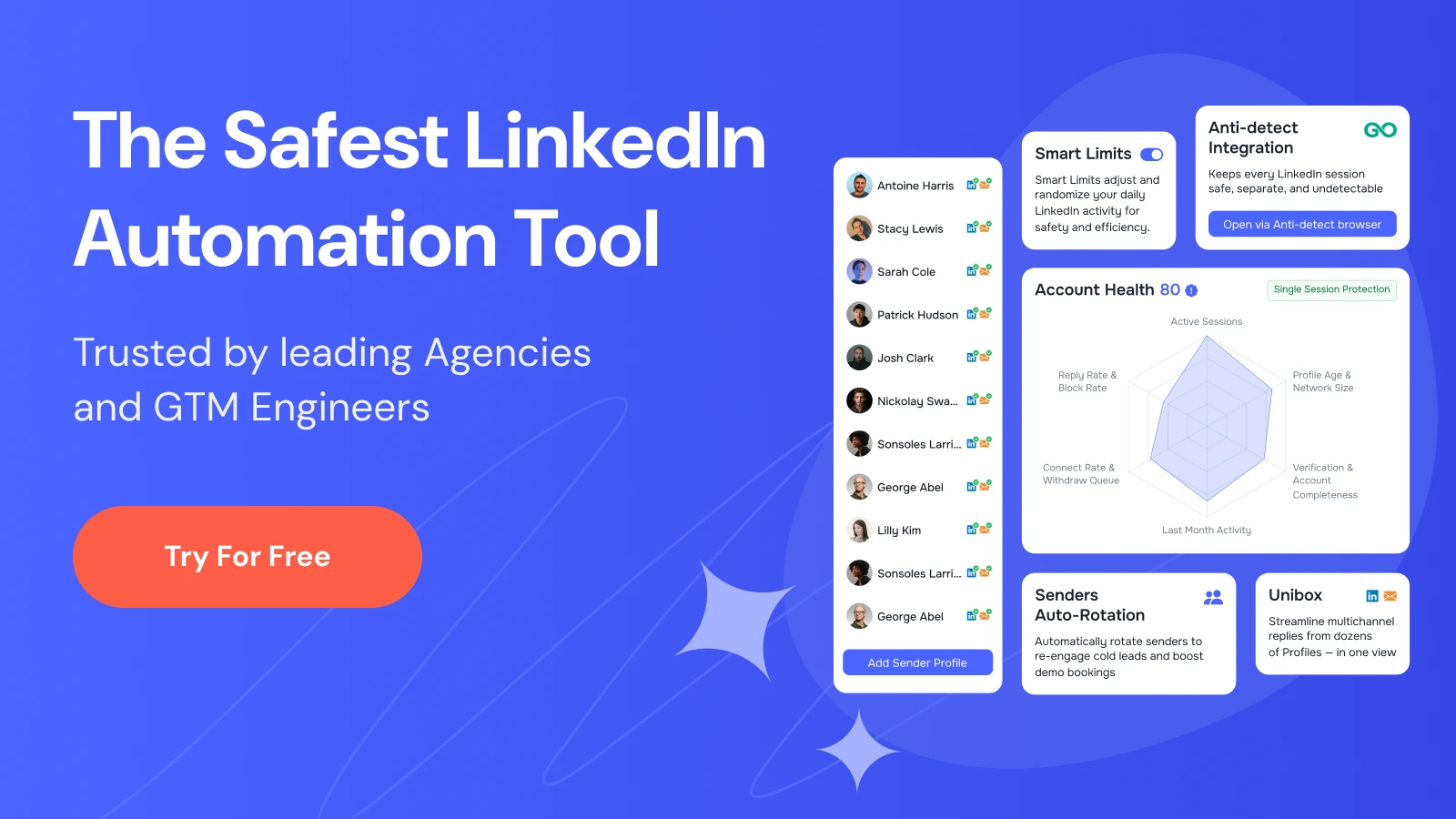
- Blast Protection: Use kill switches for anomalies, as in our rotating sender profiles that maximize outreach while minimizing restrictions.
Our platform's anti-detect browser tech ensures compliance, helping you avoid bans and scale profitably. Schedule a session to see it in action via Book a Demo.
Common Pitfalls and Professional Advice
Avoid unbounded autoscaling, which can lead to surprise bills— a pitfall affecting 25% of SaaS firms per Forrester research Forrester Cloud Cost Management Report. Insider advice: Run a 90-day FinOps initiative, starting with tagging and cleanup, to achieve predictable margins.
As a co-founder optimizing for profit, focus on ROI metrics like cost per 1,000 actions, tying infra spend to LTV/CAC for data-driven decisions.
Discover how we optimize for your needs at GetSales.io.
FAQ
What are the top strategies for optimizing cloud infrastructure for SaaS businesses?
Key strategies include FinOps tagging, autoscaling, rightsizing, and storage tiering to cut costs by 30-60% while ensuring scalability and security.
How does cloud optimization reduce ban rates in LinkedIn outreach?
By isolating workloads and using human-like throttling, as in our single session protection, you minimize detectable patterns that trigger restrictions.
Can multi-cloud strategies benefit SaaS profile management services?
Yes, for negotiation leverage and data residency, but start with single-cloud for simplicity, per Google Cloud insights.
What regulations should SaaS businesses consider for cloud infrastructure?
Follow NIST zero-trust, GDPR for data protection, and CAN-SPAM for email, ensuring compliant automation to protect profits.
How can I calculate ROI from cloud optimization?
Track metrics like gross margin per feature and cost per action, using tools from AWS or Azure to allocate spend accurately.