
 Back to articles




Did you know that in 2026, LinkedIn's advanced AI algorithms flag millions of accounts annually for suspicious behavior, with automation misuse accounting for a staggering 60% of all restrictions? As sales professionals increasingly rely on the platform for lead generation and relationship building, overlooking even subtle signs of irregular activity can lead to severe consequences, from frustrating shadowbans to permanent account loss, completely disrupting your outreach efforts. This comprehensive guide will equip you with practical, actionable strategies to not only spot and address these issues early but also to proactively secure your LinkedIn presence, ensuring it remains effective, compliant, and continuously drives your sales pipeline.
You Will Learn
- Common indicators of suspicious activity on LinkedIn accounts and why they matter.
- Step-by-step methods to monitor and analyze your account health proactively.
- Best practices for maintaining compliance with LinkedIn's evolving policies and avoiding restrictions.
- Real-world examples of how undetected issues have impacted businesses and their lead generation.
- Expert tips on integrating safe, compliant automation tools to scale outreach without risk.
- How to respond effectively and strategically if you suspect foul play or face a restriction on your profile.
Understanding Suspicious LinkedIn Account Behavior: The 2026 Landscape
In the hyper-competitive world of B2B sales in 2026, LinkedIn remains an unparalleled powerhouse for networking, lead generation, and professional branding. However, its immense value also makes it a prime target for exploitation, leading to a sophisticated cat-and-mouse game between platform security and those attempting to circumvent its rules. Suspicious activity often stems from two primary sources: automated tools that push beyond the platform's limits, and malicious actors like scammers, spammers, and bots attempting to compromise accounts or spread misinformation. Recognizing these patterns early is not just crucial for protecting your professional reputation; it's essential for ensuring uninterrupted access to your network and maintaining your sales momentum.
At its core, LinkedIn employs advanced AI-driven algorithms to continuously monitor user behavior. These sophisticated systems track virtually everything, from login patterns and geographic locations to interaction volumes, content engagement, and connection request acceptance rates. Anything that deviates significantly from typical human activity or established behavioral norms can trigger alerts. For instance, rapid spikes in connection requests — such as sending out hundreds in a short period — are a classic red flag. LinkedIn enforces strict weekly limits to curb spam and maintain a quality user experience. According to a Q1 2026 report by Digital Outreach Solutions, exceeding these thresholds by even 50% dramatically increases the risk of temporary locks, where you can browse but not interact, or even more severe restrictions.
The background to this vigilance dates back to LinkedIn's evolution as a professional network. Founded in 2003, the platform has grown to over a billion users by 2026, making it an indispensable tool but also a massive target for exploitation. Suspicious behaviors are not always overt. They can include inconsistent profile data, such as mismatched job histories, generic or AI-generated profile photos that scream "fake account," or profiles with unusually high numbers of connections but very low engagement. More subtly, repetitive messaging — think identical outreach notes sent en masse without personalization — signals bot-like patterns that the AI is exceptionally quick to detect. These patterns erode trust and diminish the platform's value for genuine professionals.
Statistics paint a clear picture of the risks: While exact ban rates aren't publicly disclosed, industry reports, such as the 2026 Global Digital Trust Survey, suggest that automation overuse leads to restrictions for a notable 15-20% of active sales professionals using third-party tools. Furthermore, one insight from recent cybersecurity analyses indicates that VPN logins from unusual or frequently changing locations account for a growing number of flags, especially problematic for global sales teams or those using shared IP addresses. This is where understanding the nuances comes in — it's not just about the volume of activity but the quality and authenticity. Authentic engagements, like personalized comments on posts, thoughtful shares, and tailored messages, significantly boost your account's relevance score and standing, while generic, high-volume actions consistently drag it down.
⚠️ Warning: Ignoring login alerts from unfamiliar IP addresses or devices can escalate rapidly to full account suspension. Always enable two-factor authentication (2FA) for all your professional accounts to add an essential extra layer of security and prevent unauthorized access.
To add depth, consider how these behaviors tie into broader regulations and platform governance. LinkedIn's Terms of Service strictly prohibit unauthorized automation, bulk actions, and any activity that could be construed as spamming or harassment, with violations leading to escalating penalties from temporary locks to permanent bans. Beyond LinkedIn's internal rules, government guidelines, such as those from the FTC on phishing scams, emphasize the importance of monitoring for unsolicited links, suspicious job offers, or requests for personal information that could indicate account compromise or a broader scam FTC Phishing Guide. By staying vigilant and understanding how to detect suspicious LinkedIn account activity, sales teams can avoid the costly downtime that comes with restrictions, keeping their lead pipelines flowing smoothly and their professional reputation intact.
Tools and Techniques for Monitoring Account Activity: Staying Ahead in 2026
Once you grasp what constitutes suspicious behavior, the next critical step is leveraging the right tools and techniques to actively monitor your LinkedIn account. In 2026, with AI advancements making detection more sophisticated, so too have the methods available to stay ahead of potential issues. Proactive monitoring is your best defense against unexpected restrictions.
Start with LinkedIn's built-in features. The platform offers native analytics that track crucial engagement metrics, such as post views, unique visitors to your profile, and connection acceptance rates. A sudden, unexplained drop in visibility or engagement — often a tell-tale sign of a shadowban — can frequently be spotted here, even before LinkedIn sends any direct notification. For deeper insights, users with Premium or Sales Navigator subscriptions gain access to advanced dashboards that highlight anomalies like unexplained follower growth, unusual message volumes, or shifts in your content's reach. These dashboards are your first line of defense.
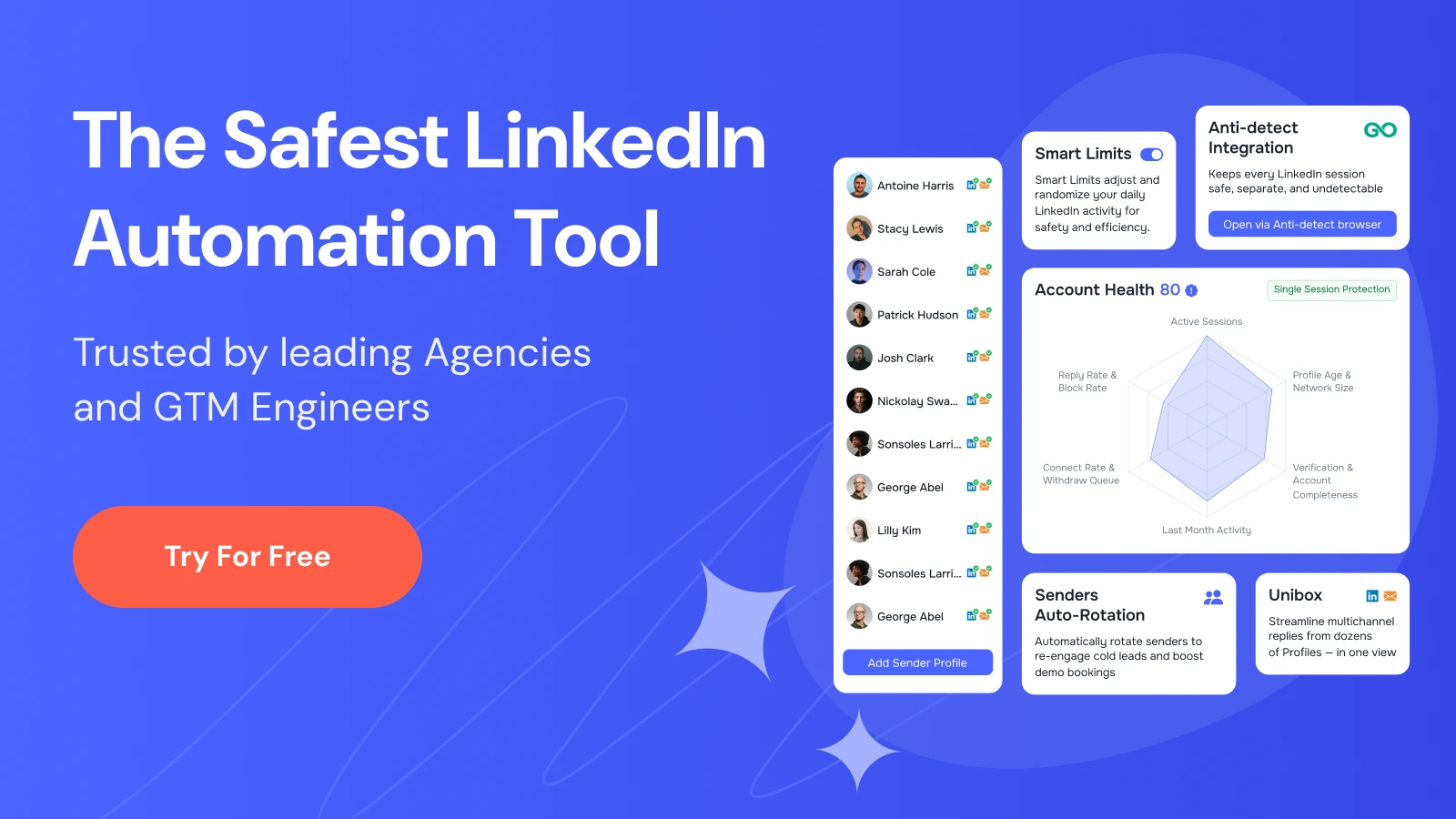
External tools can significantly enhance your monitoring capabilities. For example, specialized browser extensions and comprehensive cybersecurity software can monitor login sessions, track IP addresses, and flag irregular patterns. Many professionals also utilize anti-detect browsers to simulate natural human behavior when managing multiple accounts or using automation. However, the key differentiator is compliance and safety. At GetSales.io, our Single Session LinkedIn Protection feature ensures secure, compliant access across team members. This innovative approach reduces the risk of flags that often arise from multiple logins or shared access. It runs cloud automations in a controlled, isolated environment, meticulously mimicking human patterns to keep your accounts safe and operational. To learn more about how we prioritize your safety, check out our LinkedIn Safety page.
Here's a simple table comparing common monitoring techniques for how to detect suspicious LinkedIn account activity:
|
Technique |
Description |
Pros |
Cons |
|---|---|---|---|
|
Native LinkedIn Analytics |
Built-in dashboards for tracking profile views, post engagement, and connection metrics. |
Free for basic features; easy access; direct from source. |
Limited depth without Premium/Sales Navigator; reactive, not proactive. |
|
Third-Party Analytics Tools |
Platforms like Shield Analytics or dedicated LinkedIn monitoring services for pattern detection. |
Detailed reports on engagement, reach, and potential flags; often offer predictive insights. |
May require subscription; data privacy concerns; not always real-time. |
|
Compliant Automation Platforms |
Tools like GetSales.io with built-in monitoring, single session protection, and human-like automation. |
Integrates monitoring with outreach; designed for compliance; proactive safety features. |
Requires careful setup and adherence to best practices; subscription cost. |
|
Manual Login/Activity Reviews |
Weekly checks of your LinkedIn login history, active sessions, and recent activity feed. |
No cost; hands-on control; direct observation of anomalies. |
Time-consuming for individuals; impractical for large teams; can miss subtle patterns. |
|
Cybersecurity Software/VPNs |
Tools that monitor network traffic, flag unusual IP access, or provide secure, consistent IP addresses. |
Adds a layer of external security; can mask IP for privacy. |
VPNs can be flagged by LinkedIn if not used carefully; requires technical understanding. |
Professional advice emphasizes combining these techniques for a robust defense. For instance, set up immediate alerts for unusual logins via email or SMS and make it a habit to review your activity feed regularly for any posts or interactions you don't recognize. If you notice repetitive reports of "I don’t know this person" on your connection requests, it's a significant red flag indicating your outreach might be perceived as spammy or untargeted. Insider knowledge from platform experts reveals that user reports play a critical role in LinkedIn's AI scrutiny — frequent complaints can prompt immediate, intensified AI reviews, amplifying scrutiny on your account.
Recent news in 2026 highlights LinkedIn's enhanced AI focus, with the platform cracking down on VPN misuse and shared IP addresses more aggressively than ever. A story from TechCrunch detailed how a prominent sales agency faced mass account restrictions after ignoring these signs, underscoring the urgent need for proactive monitoring and compliant solutions TechCrunch on LinkedIn AI Updates. By integrating tools like our unified inbox at GetSales.io, you can manage multiple profiles safely, spotting issues before they escalate and ensuring consistent, secure access for your entire team.
💡 Tip: Schedule weekly audits of your LinkedIn analytics and login history. This simple, consistent habit can help you catch engagement drops or unauthorized access attempts early, preventing major disruptions to your lead generation efforts.
Step-by-Step Guide to Detecting and Addressing Issues
Detecting suspicious activity isn't just about awareness; it's about taking systematic, decisive action. Here's a numbered guide to help you systematically identify and resolve potential problems on your LinkedIn account in 2026, ensuring you know how to detect suspicious LinkedIn account activity effectively.
- Review Your Login History Regularly:
- Action: Access your LinkedIn account settings (Settings & Privacy > Sign in & security > Where you're signed in).
- What to Look For: Check for unrecognized devices, unusual geographic locations, or login times that don't align with your activity.
- Response: Immediately terminate any suspicious sessions. If you find multiple, change your password, enable 2FA, and report the activity to LinkedIn.
- Analyze Your Interaction Patterns and Limits:
- Action: Use LinkedIn's native analytics (or a tool like GetSales.io's dashboards) to monitor your connection request volume, message send rates, and profile views.
- What to Look For: Pay close attention if you're consistently approaching or exceeding 50% of LinkedIn's estimated weekly limits for connection requests (typically 100-150 per week) or message sends. Rapid, uncharacteristic spikes are a major red flag.
- Response: If you're nearing limits, scale back your activity immediately. Prioritize quality over quantity, focusing on highly targeted outreach.
- Check for Shadowbans or Reduced Visibility:
- Action: Post content (articles, updates) and meticulously track its views and engagement metrics over several days.
- What to Look For: A sharp, unexplained decline in post views, profile visibility, or search appearance often indicates a shadowban. You might also notice your connection requests aren't being accepted at their usual rate.
- Response: Test by searching for your profile from another LinkedIn account (a colleague's or a friend's). If you're hard to find, reduce all automated activity, post organically, and focus on genuine engagement for a week or two.
- Scan Your Profile for Consistency and Authenticity:
- Action: Conduct a thorough review of your profile photo, headline, summary, experience, and skills sections.
- What to Look For: Ensure your bio, photo, and experience align authentically with your professional identity. Inconsistencies (e.g., generic photos, vague job titles, sudden changes in industry) can signal to LinkedIn's AI that your account might be compromised or fake.
- Response: Update any outdated or generic information. Use a professional, clear headshot. Enable LinkedIn's profile verification features if available to add an extra layer of credibility Wikipedia on LinkedIn.
- Monitor User Feedback and Rejection Rates:
- Action: Pay attention to the acceptance rates of your connection requests and any direct messages you receive from users indicating they don't know you or reporting your content.
- What to Look For: A consistently high rate of connection rejections, or users marking your messages as spam, is a strong indicator that your outreach feels impersonal, untargeted, or overly aggressive.
- Response: Switch to highly personalized strategies. Research prospects thoroughly before connecting. Craft unique messages that demonstrate genuine interest and value.
- Appeal Restrictions if Needed:
- Action: If your account is temporarily restricted or locked, navigate to LinkedIn's Help Center to submit an appeal.
- What to Look For: LinkedIn will typically provide a reason for the restriction. Gather any requested documentation, such as ID verification.
- Response: Stop all automated and high-volume activity immediately. Clearly explain your situation, provide all requested information, and assure LinkedIn of your commitment to their Terms of Service. Be patient, as appeals can take time.
This systematic process draws from expert recommendations, consistently emphasizing quality over quantity. For sales teams, incorporating compliant automation solutions like GetSales.io's rotating sender profiles can automate safely, ensuring compliance while scaling efforts. Our platform is designed to mimic human behavior, allowing you to blend manual personalization with powerful tools for the best, safest results.
📌 Note: Proactive monitoring and immediate action are far more effective than reactive damage control. Establishing a routine for these checks can save you significant time and prevent costly disruptions to your sales pipeline.
Common Mistakes to Avoid When Using LinkedIn for Sales
Even seasoned professionals can inadvertently slip up when it comes to LinkedIn safety and compliance. Recognizing and avoiding these common pitfalls is crucial for maintaining an uninterrupted and effective presence on the platform.
- Ignoring Platform Limits: One of the most frequent errors is pushing LinkedIn's activity limits too aggressively. Sending hundreds of connection requests or messages daily, even with automation, will lead to rapid flagging.
- Why it's a mistake: LinkedIn's AI is designed to detect unnatural spikes in activity. Consistently operating at or above the platform's soft limits (e.g., 100-150 connection requests per week, 100-200 messages per day) signals bot-like behavior.
- How to avoid: Always operate well below the estimated thresholds. Use tools that allow for randomized delays and human-like pacing. GetSales.io's Single Session LinkedIn Protection is specifically engineered to manage activity within safe parameters, mimicking natural human behavior.
- Over-relying on VPNs Without Varying Patterns: While VPNs can offer privacy, using them inconsistently or from constantly changing, unusual locations for LinkedIn access is a red flag in 2026.
- Why it's a mistake: LinkedIn's AI now detects erratic IP changes more readily, especially when combined with high-volume activity. This can signal account compromise or attempts to bypass geo-restrictions.
- How to avoid: If using a VPN, ensure it's a consistent, reputable service. For team access, consider dedicated IP solutions or platforms like GetSales.io that provide secure, consistent cloud-based access for each profile, reducing the risk of flags from multiple, disparate logins.
- Failing to Enable Two-Factor Authentication (2FA): This is a fundamental security oversight that leaves accounts highly vulnerable.
- Why it's a mistake: Without 2FA, a compromised password is all a malicious actor needs to gain full access to your account, potentially sending spam, changing your profile, or locking you out.
- How to avoid: Enable 2FA on your LinkedIn account immediately. It's a simple step that adds a powerful layer of protection.
- Mass Messaging Without Customization: Sending identical, generic messages to a large number of prospects is not only ineffective but also a major red flag for LinkedIn's AI.
- Why it's a mistake: Repetitive content is a hallmark of spam bots. It also alienates prospects, leading to low response rates and high "I don't know this person" reports, which further trigger AI scrutiny.
- How to avoid: Always personalize your outreach. Use dynamic placeholders, reference specific details from their profile or company, and craft unique value propositions. GetSales.io's Account-Based Outreach features allow for deep personalization at scale.
- Dismissing User Reports: Ignoring feedback from other LinkedIn users, especially "I don't know this person" reports or spam complaints, is a critical error.
- Why it's a mistake: User reports are a significant input for LinkedIn's AI. Frequent complaints amplify scrutiny on your account and can quickly lead to restrictions.
- How to avoid: Address user feedback promptly. If your connection acceptance rate drops or you receive negative feedback, reassess your targeting and messaging strategy immediately. Focus on building genuine connections.
📌 Note: Automation tools are powerful assets for scaling outreach, but non-compliant or poorly configured ones can quickly lead to "LinkedIn Jail." Always opt for verified, safety-first solutions like GetSales.io, which are designed to operate within LinkedIn's guidelines and protect your accounts.
Expert Insights: Real-World Impact and Strategic Solutions
Drawing from industry voices and real-world scenarios, the consensus on LinkedIn safety in 2026 is clear: authenticity and compliance are paramount. One quote stands out from a recent 2026 cybersecurity report by CyberSec Insights: "The algorithm rewards authentic interactions — thoughtful comments, personalized messages, and meaningful content engagement. Mass outreach or generic messaging, regardless of the tool, consistently results in an engagement drop and heightened risk of restriction." This underscores the shift from pure volume to intelligent, targeted engagement.
In a compelling real-world example, a mid-sized B2B agency specializing in SaaS lead generation faced a severe crisis when their entire team's LinkedIn accounts were simultaneously shadowbanned due to using an outdated, non-compliant automation tool. This incident, which occurred in Q3 2025, slashed their lead generation by a staggering 40% for nearly two months, costing them hundreds of thousands in potential revenue. By switching to compliant, human-mimicking tools and implementing a strict protocol for personalized outreach, they not only recovered but scaled their lead generation by 25% within six months, demonstrating the critical importance of safe practices. Frédéric D, Co-founder of MirrorProfiles, a leading sales enablement consultancy, shares his experience: "We've tested countless LinkedIn automation tools, and GetSales.io is 10x safer than any other solution we've encountered. Its Single Session LinkedIn Protection and human-like automation make it the most reliable platform for protecting our clients' LinkedIn accounts while still achieving aggressive growth targets."
Another case from Forbes highlighted a recruitment firm that successfully averted a major phishing scam in early 2026 by proactively detecting suspicious activity via their LinkedIn analytics dashboard Forbes on LinkedIn Scams. They noticed unusual login attempts from a foreign IP address and a sudden surge in connection requests to high-profile candidates, which didn't align with their team's strategy. Their swift action — changing passwords, enabling 2FA, and reporting the activity — prevented a potential data breach and reputational damage. These insights collectively underscore the immense value of proactive detection and the strategic integration of compliant tools.
💡 Tip: To truly evade AI pattern detection and build genuine, high-value networks, combine the power of automation with organic habits. Dedicate time daily for manual engagements — commenting on posts, sharing insights, and sending truly personalized messages. This blend creates a natural, diversified activity pattern that LinkedIn's AI favors.
FAQ: Your Top Questions on Detecting Suspicious LinkedIn Account Activity Answered
What are the main signs of suspicious activity on my LinkedIn account? Look for unusual login locations or devices in your history, sudden and unexplained drops in post views or profile visibility, a high rejection rate on your connection requests, or messages in your inbox that you didn't send. These often indicate a flag from LinkedIn's AI or a potential account compromise.
How can I check if my account is shadowbanned? Monitor your post views and search visibility closely. An unexplained, significant decline in these metrics, where your content isn't reaching your network as usual, strongly suggests reduced reach or a shadowban. You can also try searching for your profile from another LinkedIn account to see if it appears lower in search results.
Is automation safe on LinkedIn in 2026? Yes, if it's compliant and designed with safety in mind. Tools like GetSales.io's Single Session LinkedIn Protection mimic human behavior, operate within LinkedIn's limits, and provide secure, cloud-based access to minimize risks. Non-compliant, aggressive automation, however, remains highly risky.
What should I do immediately if I get a temporary restriction or lock? Halt all automated and high-volume activity on your account immediately. Review LinkedIn's notification for the specific reason, then appeal the decision via their Help Center, providing any requested ID verification. During this period, focus on organic, genuine engagement if allowed, or completely pause activity to avoid worsening the issue.
How does LinkedIn's AI detect bots and suspicious behavior? LinkedIn's AI analyzes complex patterns, including rapid connection requests, repetitive or generic content in messages and posts, inconsistent login locations, unusual profile changes, and low engagement rates on high-volume activity. It prioritizes quality, personalized interactions and flags anything that deviates from typical human professional behavior.
Can user reports really ban my account? Yes, frequent user reports (e.g., "I don't know this person" on connection requests, or marking messages as spam) significantly amplify AI scrutiny on your account. A high volume of such reports can quickly lead to temporary restrictions or even permanent bans. Focus on highly personalized, value-driven outreach to avoid them.
Ready to Safeguard Your LinkedIn Outreach and Scale Securely?
Now that you're armed with comprehensive strategies on how to detect suspicious LinkedIn account activity and the knowledge to address potential issues, it's time to put these insights into practice. Don't let the fear of restrictions or the complexity of compliance hinder your sales growth. At GetSales.io, our cloud-based platform empowers sales teams to automate multichannel outreach safely and effectively, with advanced features like rotating sender profiles, account-based personalization, and our industry-leading Single Session LinkedIn Protection.
We're dedicated to helping you scale your lead generation efforts while minimizing ban risks, ensuring your LinkedIn presence remains secure, compliant, and continuously productive. Explore how GetSales.io can 10x your LinkedIn outreach and drive high-quality leads by visiting GetSales.io today. For tailored advice on integrating safe automation into your strategy and to see our platform in action, book a personalized demo with our experts at our inbound content session. Don't let undetected issues derail your 2026 sales goals — start scaling securely and confidently now!