
 Back to articles




Did you know that a massive 2021 LinkedIn data scraping incident exposed information from 700 million users, underscoring the vulnerability of professional profiles in today's digital landscape? As co-founders of LinkedIn profile management and rental services, safeguarding client LinkedIn data isn't just a best practice — it's essential for protecting thousands of accounts, ensuring scalability, and avoiding costly breaches or bans. In this article, we'll explore proven strategies to manage client data securely and efficiently, drawing on regulations, expert insights, and real-world tactics to minimize risks while scaling outreach. From compliance with GDPR and CCPA to leveraging secure automation tools like ours at GetSales.io, you'll gain actionable advice to fortify your operations.
Understanding the Risks to Client LinkedIn Data
Client LinkedIn data — encompassing names, job titles, work histories, contacts, and messaging patterns — qualifies as personal data under strict regulations like GDPR and personal information under CCPA when linked to identifiable individuals. Agencies handling hundreds or thousands of profiles face amplified threats, where a single misstep in automation or access can lead to mass account restrictions, reputational harm, or legal penalties.
Key risks include:
- Account takeovers from weak passwords or phishing, with reports showing weak credentials contribute to 90% of breaches on similar platforms (Verizon Data Breach Investigations Report).
- Automation-induced bans from over-aggressive actions, such as excessive connection requests, which LinkedIn's AI systems flag for unusual patterns.
- Data exposure through unauthorized scraping or insecure third-party tools, as seen in the 2021 incident affecting 700 million users (BBC News on LinkedIn Data Breach).
By prioritizing best practices for safeguarding client LinkedIn data, you can mitigate these dangers and build trust with clients.
Implementing Strong Authentication and Access Controls
Start with foundational security to protect client accounts at scale. Mandate unique, strong passwords rotated every 90 days, and enforce two-factor authentication (2FA) on all profiles — it blocks 99.9% of automated attacks, according to cybersecurity experts (Microsoft Security Blog).
Additional steps:
- Use password managers for secure team sharing, avoiding risky methods like chat apps or documents.
- Monitor login history and active sessions regularly via LinkedIn's settings to spot anomalies.
- Implement role-based access: Limit permissions to "builders," "operators," or "viewers" to prevent unauthorized changes.
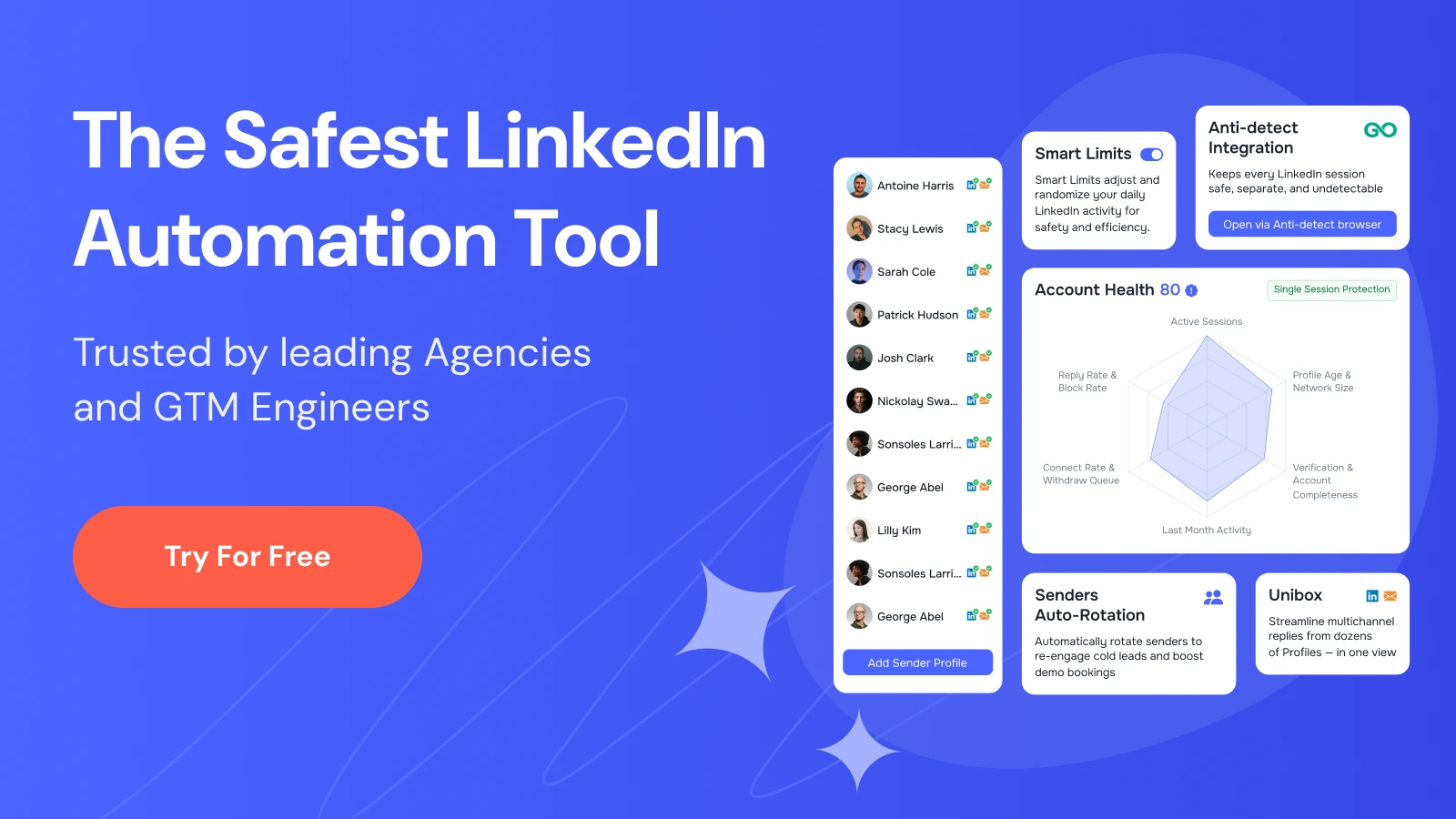
At GetSales.io, our Single Session LinkedIn Protection ensures secure, shared access without exposing credentials, reducing ban risks while enabling team collaboration. Learn more about our approach to LinkedIn safety.
Ensuring Compliance with Regulations and LinkedIn Policies
Compliance is non-negotiable for managing client data securely. Under GDPR, LinkedIn data processing requires a lawful basis (often legitimate interest for B2B outreach), data minimization, and breach notifications within 72 hours if risks arise (Official GDPR Site). Similarly, CCPA demands opt-out mechanisms and clear disclosures for California residents' data (California Attorney General's CCPA Page).
Align with LinkedIn's User Agreement, which prohibits account sharing, rental, impersonation, and unauthorized automation — violations can result in permanent bans (LinkedIn User Agreement).
Best practices include:
- Drafting an internal policy mapping allowed automation behaviors, reviewed by legal counsel.
- Maintaining a Record of Processing Activities for LinkedIn-based prospecting.
- Honoring data subject rights, such as quick opt-outs reflected in your CRM.
Our platform at GetSales.io integrates GDPR and CCPA-aligned features, like audit logs and data minimization tools, to help you stay compliant effortlessly.
Safe Automation and Profile Management Strategies
For scalable outreach without compromising security, throttle actions to mimic human behavior. Experts recommend 50–100 connection requests per day per account, with warm-up periods for new profiles to avoid detection (HubSpot Sales Blog on LinkedIn Automation).
Key tactics:
- Randomize schedules and templates to evade LinkedIn's anti-abuse systems.
- Use unique IPs and device fingerprints per account, avoiding multi-account logins from the same source.
- Opt for tools with rate limiting and humanized sequences, like our Rotating Sender Profiles and Omni-Channel Automation at GetSales.io.
As Frédéric D., co-founder of a profile-rental platform, advises: “Set correct expectations with your clients. Be truthful and explain the risks and rewards of using LinkedIn automation.” This transparency fosters long-term client relationships.
Training, Incident Response, and Data Handling
Human error accounts for 95% of cybersecurity incidents, per industry reports (IBM Cost of a Data Breach Report). Combat this with annual staff training on phishing recognition, VPN usage, and approved tools.
Develop an incident response plan:
- Triage compromised accounts swiftly.
- Notify clients and authorities promptly.
- Use encrypted storage for any exported data, with defined retention periods.
We recommend a quarantine environment for testing new tools, isolating risks from live client accounts. Explore how GetSales.io's Analytics & Insights and CRM Integration support secure data handling — schedule a demo.
FAQ
What are the top risks when managing client LinkedIn data? The primary risks include data breaches, account bans from non-compliant automation, and regulatory violations under GDPR or CCPA, potentially leading to fines or loss of access.
How can I ensure compliance with LinkedIn's policies? Adhere to their User Agreement by avoiding account sharing or unauthorized scraping, and use compliant tools like ours with single-session protection.
Why is 2FA crucial for client accounts? It prevents 99.9% of automated attacks, providing a critical layer of security against unauthorized access.
How does GetSales.io help safeguard client data? Our cloud-based platform features Single Session Protection, rotating profiles, and compliance tools to scale outreach safely — visit GetSales.io for details.
What should be in an internal security policy? Include account lifecycle rules, access controls, incident response steps, and alignment with regulations like GDPR and CCPA.