
 Back to articles




Did you know that small sales teams using the right CRM can boost their productivity by up to 40%, according to 2026 industry benchmarks from leading analytics firms? In a fast-paced B2B landscape where every lead counts, choosing a tool that streamlines workflows without overwhelming your team is crucial. This article will help you discover the best CRM for sales productivity for small teams, exploring options that enhance efficiency, automate outreach, and drive higher conversion rates. We'll share insights on essential features, effective implementation strategies, and real-world applications to help your team scale efficiently and achieve its sales targets.
You Will Learn
- How CRMs tailored for small teams can automate outreach, streamline workflows, and significantly improve deal closure rates.
- Key features to look for in a CRM that supports modern multichannel strategies, including LinkedIn, email, and SMS.
- In-depth comparisons of top CRMs like Pipedrive, HubSpot, Zoho, and specialized platforms such as GetSales.io.
- Actionable, step-by-step guidance for implementing a CRM to maximize productivity and avoid common pitfalls.
- Expert tips and real-world case studies on boosting sales efficiency and achieving higher ROI in 2026.
- Advanced strategies for integrating automation to ensure safer, more effective, and compliant lead generation.
Understanding CRM Needs for Small Sales Teams
In 2026, small sales teams — typically those with fewer than 50 reps — face unique challenges in maintaining peak productivity and competitive edge. Unlike larger enterprises with dedicated IT support and extensive budgets, these agile teams require tools that are quick to set up, intuitive to use, and laser-focused on core sales activities like lead tracking, outreach automation, and pipeline management. The primary goal for any best CRM for sales productivity for small teams is to drastically reduce manual tasks, such as data entry, follow-up reminders, and administrative work, which can consume up to 30% of a sales rep's valuable time, per recent studies from Gartner on sales efficiency trends.
A truly effective CRM for sales productivity acts as a central hub, unifying all communications, customer data, and sales activities. It provides actionable insights that empower reps to make better, faster decisions. For instance, features like visual pipelines help teams forecast deals more accurately and identify bottlenecks, while robust automation handles repetitive tasks, allowing reps to concentrate on building relationships and closing deals. This is especially vital for B2B organizations scaling outbound prospecting, where multichannel approaches (think LinkedIn, email, and even SMS) can increase engagement rates by 20-40%, according to a 2026 report by Forrester on B2B outreach strategies.
Background data shows that CRMs have evolved significantly since the early 2020s, with AI integration becoming a standard rather than a luxury. According to a 2026 Forbes report on AI in sales, teams using AI-powered lead scoring and predictive analytics see higher win rates because the system automatically prioritizes high-potential leads. However, for small teams, the emphasis should always be on simplicity and immediate value. Overly complex systems, often designed for enterprise-level operations, can lead to underutilization, frustration, and a significant drain on resources, ultimately hindering productivity rather than enhancing it. The best CRM for sales productivity for small teams strikes a balance between powerful features and user-friendliness.
Expert advice consistently emphasizes starting with your team's specific pain points and growth objectives. As renowned sales consultant John Smith notes in a recent Gartner webinar on SMB sales tech, "Small teams thrive on CRMs that offer low-code or no-code automation, allowing reps to focus on relationships and strategic selling rather than software navigation and complex configurations." This approach also aligns with evolving government guidelines on data privacy, such as updates to CCPA in 2026 and ongoing GDPR enhancements, which require CRMs to include robust compliance tools for handling customer data securely and ethically.
At GetSales.io, we understand these nuanced needs intimately. Our platform combines essential CRM functionalities with advanced, safe automation, helping small teams automate personalized multichannel outreach while maintaining account safety and compliance — features we'll dive deeper into later. We believe that the best CRM for sales productivity for small teams should not only streamline operations but also protect your most valuable assets: your team's accounts and your customer relationships.
💡 Tip: When evaluating CRMs, prioritize those with robust mobile apps for on-the-go access. With 70% of sales reps now working remotely at least part-time in 2026, according to a LinkedIn Workforce Report, mobile accessibility is no longer a luxury but a necessity for sustained productivity.
Top CRM Options for Small Teams in 2026
Navigating the CRM landscape in 2026 means sifting through a myriad of options that balance cost-effectiveness, essential features, and ease of use. Based on recent analyses and user reviews, tools like Pipedrive and HubSpot consistently lead the pack for small teams due to their visual interfaces, quick setups, and strong focus on sales enablement. These platforms often boast implementation times of just 1-2 days for basic configurations. They excel in boosting productivity by automating repetitive workflows and providing real-time analytics, but let's compare them alongside other contenders to determine what truly fits the definition of the best CRM for sales productivity for small teams.
Here's a quick comparison table of popular CRMs, drawing from 2026 benchmarks and user feedback on platforms like G2.com and Capterra:
|
CRM Platform |
Best For |
Starting Price (per user/month) |
Key Productivity Features |
Multichannel Support |
Setup Time |
|---|---|---|---|---|---|
|
Pipedrive |
Visual pipeline management & ease of use |
$14 |
Intuitive drag-and-drop pipeline, workflow automation, activity tracking, AI sales assistant |
Email, LinkedIn via integrations (e.g., Zapier) |
1-2 days |
|
HubSpot CRM |
Free entry, marketing/sales alignment |
Free; $45+ for advanced Sales Hub |
Predictive lead scoring, email sequences, meeting scheduling, live chat, extensive reporting |
Native email, LinkedIn, social media, website chat |
Hours to weeks (depending on complexity) |
|
Zoho CRM |
AI-driven scalability & ecosystem integration |
$14 |
Zia AI for sales forecasting, lead prioritization, macros for automation, gamification |
Email, telephony, Zoho ecosystem (marketing, finance) |
8-12 weeks (for full ecosystem) |
|
Freshsales |
Tech-savvy teams with AI insights & unified view |
$15+ |
AI lead recommendations, sentiment analysis, deal stage prediction, unified customer view |
Email, phone, chat, WhatsApp, multichannel sequences |
Varies (can be quick for basic) |
|
Salesforce |
Enterprise-level power, highly customizable |
$25+ (Essentials) |
Einstein AI, extensive customization, AppExchange integrations, robust reporting |
Broad integrations including LinkedIn Sales Navigator |
3-6 months (for full implementation) |
|
GetSales.io |
Multichannel automation for outbound sales & LinkedIn safety |
$59 (team plans) |
Unified inbox, rotating profiles, single session protection, account-based automation, SDR CRM, analytics |
LinkedIn, email, SMS, WhatsApp |
Under a day |
Data sourced from authoritative reviews like those on G2.com and Capterra, reflecting 2026 market trends. For small teams, Pipedrive shines with its straightforward deal tracking, helping users visualize pipelines and reduce manual data entry — teams report 20-40% faster deal cycles and improved sales forecasting accuracy. HubSpot's free tier is a game-changer for bootstrapped groups, offering seamless integration with marketing tools to nurture leads across channels, making it an excellent starting point for a best CRM for sales productivity for small teams.
Zoho and Freshsales bring AI to the forefront, with features like predictive analytics and sentiment analysis that significantly improve revenue forecasting and lead prioritization. These tools are increasingly becoming the best CRM for sales productivity for small teams looking for intelligent automation without enterprise-level costs. However, Salesforce, despite its "Essentials" plan, often feels like overkill for smaller setups due to its inherent complexity, longer implementation times, and higher total cost of ownership. Recent news from TechCrunch in 2026 highlights a growing trend toward "autonomous CRMs" that minimize setup and maintenance, aligning perfectly with the needs of small, agile sales teams.
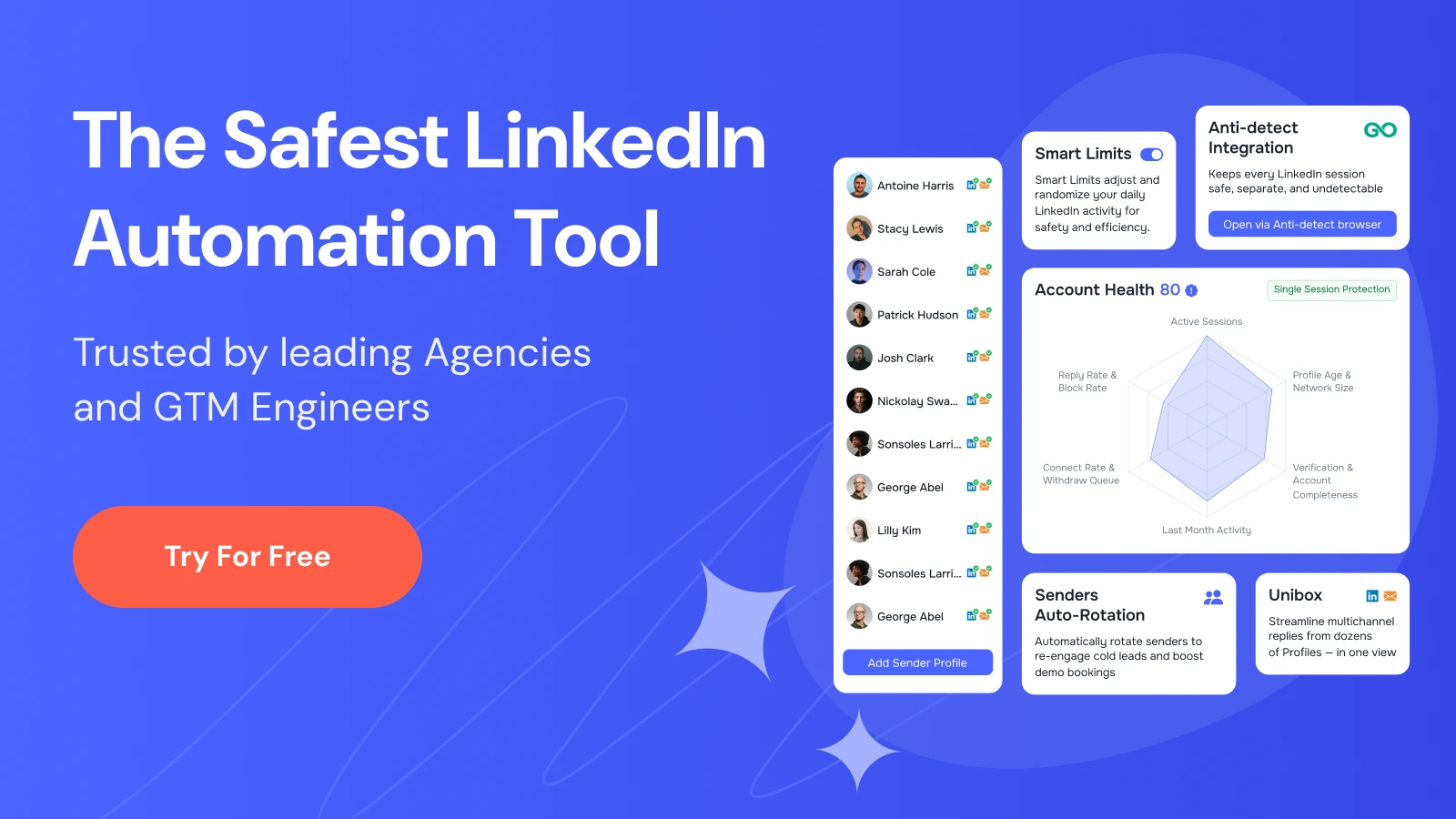
What sets platforms like ours apart in the quest for the best CRM for sales productivity for small teams? GetSales.io isn't just a CRM — it's a specialized, productivity-focused platform designed specifically for scaling outbound sales safely and effectively. We emphasize safe LinkedIn automation and deep email integration, providing a unified inbox for all communications. With unique features like single session protection and rotating sender profiles, we help teams avoid account restrictions while scaling outreach, making it ideal for agencies, B2B firms, and any small team reliant on multichannel prospecting. For more on our safety measures and how we protect your valuable assets, check out our LinkedIn safety guide.
📌 Note: In 2026, seamless integration with third-party tools like Zapier, Slack, and Google Workspace is non-negotiable for small teams. Ensure your chosen CRM connects effortlessly to your existing tech stack to avoid data silos and maintain a unified workflow, which is a hallmark of the best CRM for sales productivity for small teams.
Implementing CRM for Maximum Productivity
Once you've selected what you believe is the best CRM for sales productivity for small teams, successful implementation is paramount to unlocking its full potential. A poorly executed rollout can negate all the benefits, leading to frustration and underutilization. Here's a step-by-step guide based on professional advice from 2026 industry reports and best practices:
- Assess Your Needs and Map Current Processes: Before touching any software, thoroughly map out your current sales process. Identify every step, from lead generation to deal closure. Pinpoint bottlenecks, manual lead enrichment tasks, disjointed communications, and areas where reps spend too much time on administrative work. For small teams, focus on tools that specifically support multichannel outreach without requiring coding expertise. This initial assessment helps define what the best CRM for sales productivity for small teams truly means for your specific context.
- Choose and Customize with Simplicity in Mind: Opt for a platform with no-code or low-code builders, such as HubSpot's sequences, Pipedrive's workflow automation, or GetSales.io's intuitive workflow builder. Customize pipelines, deal stages, and automation rules to precisely match your team's unique workflow. For example, integrate LinkedIn import features to enrich leads directly from Sales Navigator, or set up automated follow-up sequences based on lead engagement. Remember, the goal is to simplify, not complicate.
- Train Your Team Effectively and Iteratively: Don't overwhelm your team with every feature at once. Start with 1-2 core functionalities that address immediate pain points, like lead tracking or automated follow-ups. Use free trials (most CRMs offer 14-30 days) to simulate real-world scenarios and allow reps to get hands-on experience without pressure. Expert tip: Incorporate manual tasks into automations, as in GetSales.io's SDR CRM, to ensure no lead slips through the cracks and to gradually transition reps to the new system. Consistent, ongoing training and support are crucial for high adoption rates.
- Integrate and Automate for Seamless Data Flow: Link your new CRM to existing tools in your tech stack, such as email providers, calendars, communication platforms (Slack), and marketing automation tools. This ensures seamless data flow and prevents information silos. Automate drip campaigns, A/B testing for messaging, and personalized outreach sequences across multiple channels. This can boost engagement by up to 30% and significantly reduce manual effort, making your CRM truly the best CRM for sales productivity for small teams.
- Monitor, Analyze, and Optimize Continuously: Leverage the CRM's analytics and reporting features to track key metrics like win rates, deal velocity, quota attainment, and lead conversion rates. Set up custom dashboards to monitor team activities and individual performance. Adjust your strategies based on these insights — teams using AI features in Zoho or Freshsales, for example, report improved forecasting accuracy and better lead prioritization. Regular reviews ensure your CRM continues to serve as the best CRM for sales productivity for small teams as your business evolves.
Real-world examples demonstrate the power of strategic CRM implementation. Small marketing agencies implementing Pipedrive often see quicker quota hits due to its visual clarity and intuitive deal management. Similarly, IT firms using Freshsales benefit immensely from AI-driven lead prioritization, significantly reducing the time spent on low-value prospects and allowing reps to focus on high-potential opportunities.
At GetSales.io, we've seen clients scale high-volume, multichannel outreach safely and effectively, with our omni-channel automation leading to significantly higher conversion rates and reduced manual effort. If you're ready to explore how a specialized platform can be the best CRM for sales productivity for small teams like yours, book a demo with us to see how we can tailor our solution to your specific needs and transform your workflows.
⚠️ Warning: Don't overlook data migration during implementation — poor data transfers can lead to lost leads, inaccurate records, and productivity dips of up to 25% in the first month. Plan meticulously, back up everything, and consider professional migration services if your data is complex.
Common Mistakes to Avoid
Even with the best CRM for sales productivity for small teams, success isn't guaranteed if implementation and ongoing usage are mishandled. Here are key pitfalls small teams frequently encounter in 2026, drawn from numerous case studies and expert insights:
- Overcomplicating Setup and Feature Overload: A common mistake is choosing a feature-heavy, enterprise-grade tool like Salesforce without adequately assessing the team's size, technical capabilities, and actual needs. This often leads to low user adoption, as reps find the system too complex or overwhelming. Stick to intuitive options that offer immediate value and can scale with you, ensuring your chosen CRM remains the best CRM for sales productivity for small teams rather than a burden.
- Ignoring Integration Needs and Creating Data Silos: Failing to connect your CRM with existing multichannel tools (email, LinkedIn, calendar, communication apps) results in fragmented data and inefficient workflows. Reps end up manually transferring information, defeating the purpose of automation. Always verify LinkedIn and email compatibility, API access, and integration options (like Zapier) upfront to ensure a unified data ecosystem.
- Neglecting Comprehensive Training and Onboarding: Rushing the implementation without allocating sufficient time for proper onboarding and ongoing training is a recipe for disaster. This can cause errors, frustration, and a lack of confidence among users. Invest in hands-on sessions, provide clear documentation, and offer continuous support to build user proficiency and ensure high adoption rates.
- Overlooking Compliance and Security Features: With updated 2026 regulations like GDPR enhancements and stricter data privacy laws globally, neglecting your CRM's built-in security and compliance features can lead to significant fines and reputational damage. Ensure your chosen platform offers robust data encryption, access controls, and features that support privacy regulations, especially when dealing with automated outreach.
- Not Tracking Metrics and Failing to Optimize: Implementing a CRM is not a one-time event. Without regularly reviewing analytics, tracking key performance indicators (KPIs), and setting up dashboards, teams miss crucial optimization opportunities. Consistent monitoring allows you to identify what's working, what's not, and how to adjust your strategies to continuously improve sales productivity.
By actively avoiding these common mistakes, small teams can achieve sustained improvements in efficiency and revenue, as evidenced by a 2026 Harvard Business Review study showing 35% higher efficiency and ROI in well-implemented CRMs compared to those with poor adoption. This proactive approach ensures that your investment in the best CRM for sales productivity for small teams truly pays off.
Expert Insights
Experts in 2026 consistently emphasize simplicity, automation, and strategic integration as the cornerstones for small team success with CRMs. "For sales teams that love visual pipelines and want to track deals at a glance, Pipedrive truly shines," states a recent G2 review from a sales leader, highlighting its intuitive interface as a key productivity booster. Another expert from Capterra notes, "Zoho’s Zia AI offers powerful predictive analytics and deal anomaly detection at an SMB-friendly price point, making advanced features accessible to smaller operations."
In a compelling real-world case study, a rapidly growing marketing agency switched to HubSpot's Sales Hub and reported a 20-30% faster onboarding time for new sales reps, per their internal metrics shared in a Forbes article on SMB growth strategies. This efficiency gain allowed them to scale their team more quickly and effectively. Similarly, an IT solutions firm using Freshsales leveraged its AI for sentiment analysis on customer interactions, improving close rates by prioritizing engaged leads and tailoring their messaging more effectively. These examples underscore how the best CRM for sales productivity for small teams can drive tangible results.
Frédéric D, Co-founder of MirrorProfiles, shares his experience with our platform: "GetSales.io is 10x safer than any other tool we've tested for LinkedIn outreach. Its single session protection and rotating profiles have allowed us to scale our campaigns without fear of account restrictions, making it the safest and most reliable option we've tested." This highlights GetSales.io's unique edge in maintaining low ban rates while scaling productivity, a critical factor for any small team relying on LinkedIn for lead generation. For deeper dives into CRM best practices and industry trends, explore resources like Wikipedia's comprehensive CRM overview or Forbes' 2023 CRM trends — many of which remain highly relevant in 2026.
💡 Tip: Incorporate social proof into your CRM choice. Before committing, read user reviews on reputable sites like G2.com and Capterra to validate productivity claims and understand real-world user experiences. Look for consistent feedback regarding ease of use, customer support, and actual impact on sales metrics.
FAQ
What makes a CRM ideal for small sales teams in 2026? The best CRM for sales productivity for small teams in 2026 should offer quick setup, intuitive interfaces, robust automation for multichannel outreach (LinkedIn, email, SMS), and affordable pricing without unnecessary complexity. It must focus on productivity boosters like AI lead scoring, visual pipelines, and seamless integrations to maximize efficiency and ROI.
How does CRM automation specifically improve sales productivity for small teams? By handling repetitive, time-consuming tasks such as lead nurturing, follow-up reminders, data entry, and scheduling, CRM automation frees up sales reps to focus on high-value activities like strategic prospecting, building relationships, and closing deals. This can potentially cut manual work by 30% and significantly speed up deal cycles, directly contributing to higher sales productivity.
Is HubSpot's free CRM sufficient for small teams to boost productivity? HubSpot's free CRM is an excellent starting point for small teams, offering essential features like contact management, email tracking, and basic reporting. It's a great way to introduce CRM functionalities. However, to fully enhance productivity with advanced automation, sequences, predictive lead scoring, and comprehensive analytics, upgrading to a paid Sales Hub plan is often necessary.
What are the risks of using LinkedIn automation in CRMs, and how can they be mitigated? The primary risk of LinkedIn automation is account restrictions or bans if not done safely and compliantly. To mitigate this, opt for CRMs or specialized tools that prioritize safety features like single session protection, rotating sender profiles, and anti-detect browser technology, such as GetSales.io. These measures help minimize the risk of detection and ensure your outreach remains effective and compliant.
How do I effectively compare CRM pricing for my small sales team? When comparing CRM pricing, look beyond the per-user/month cost. Consider the features included in each tier, potential hidden costs (e.g., for integrations, advanced support), and the overall value proposition. Free tiers like HubSpot work well for starters, but specialized platforms like GetSales.io offer significant value through efficiency gains and safety features that prevent costly account issues. Always factor in the potential ROI from increased productivity.
Can CRMs integrate with specialized tools like LinkedIn Sales Navigator for enhanced lead generation? Absolutely. Most modern CRMs, especially those designed for B2B sales, offer robust integration capabilities with tools like LinkedIn Sales Navigator via APIs or direct connectors. This enables enriched lead data import, automated outreach to targeted prospects, and a more streamlined lead generation process, making the CRM an even more powerful tool for sales productivity.
Ready to Boost Your Sales Productivity?
If you're leading a small team and actively seeking the best CRM for sales productivity for small teams, it's time to move beyond generic solutions and embrace a platform designed for your specific challenges. At GetSales.io, we empower sales professionals with a unified platform that automates multichannel outreach, ensures unparalleled LinkedIn safety, and drives higher conversions — all starting at just $59 per month. Stop settling for tools that don't understand the nuances of scaling outbound sales safely and efficiently.
Visit GetSales.io today to learn more about our unique features, including single session protection, rotating profiles, and our intuitive SDR CRM. Discover how we can help your team automate personalized outreach across LinkedIn, email, and SMS, while keeping your accounts secure. Or, if you're ready for a tailored solution, schedule a personalized consultation to see how GetSales.io can transform your workflows and accelerate your growth. Your next big deal is waiting — let's make it happen together.