
 Back to articles




Did you know that companies using CRM systems see an average 47% increase in revenue per sales rep, according to recent industry data? Choosing the right CRM can transform your sales operations, but with countless options available, it's crucial to focus on what truly drives results for your team. In this article, we'll guide you through key factors, best practices, and insights to help Sales Development Representatives (SDRs) and teams implement a CRM that boosts efficiency, integrates seamlessly with automation tools, and scales outbound efforts — drawing on expert advice and real-world data to make your decision easier.
Key Factors in Choosing a CRM for Sales Teams
When evaluating how to choose a CRM system for sales teams, prioritize alignment with your specific needs, such as lead management, automation, and multichannel outreach. Based on insights from Gartner, core considerations include defining business requirements, ease of use, integrations, scalability, and security to ensure long-term ROI Gartner on CRM Insights.
Here are the essential factors to consider:
- Business Requirements and Team Fit: Identify must-haves like contact management, sales pipelines, and forecasting. For sales teams focused on outbound prospecting, look for built-in tools for LinkedIn and email automation. Our platform at GetSales.io excels here with SDR CRM with Tasks, incorporating manual steps into automated workflows to ensure no lead slips through.
- Ease of Use and Adoption: An intuitive interface reduces training time — crucial since low adoption is a common pitfall, with up to 70% of CRM implementations failing due to poor user buy-in, per Harvard Business Review HBR on Choosing a CRM. We prioritize user-friendly dashboards, like our Unified Inbox, for seamless collaboration.
- Integrations and Automation: Ensure compatibility with tools for email, calendars, and social platforms. Recent trends highlight AI-driven integrations for predictive lead scoring and omnichannel campaigns Statista CRM Trends. At GetSales.io, our CRM Integration syncs historical communications and supports deal pipeline management, enhancing multichannel lead generation.
- Scalability and Cost: Opt for systems that grow with your team. With plans starting at $59 per month, we offer scalable options including lifetime access, making it cost-effective for agencies and B2B organizations scaling high-volume outreach.
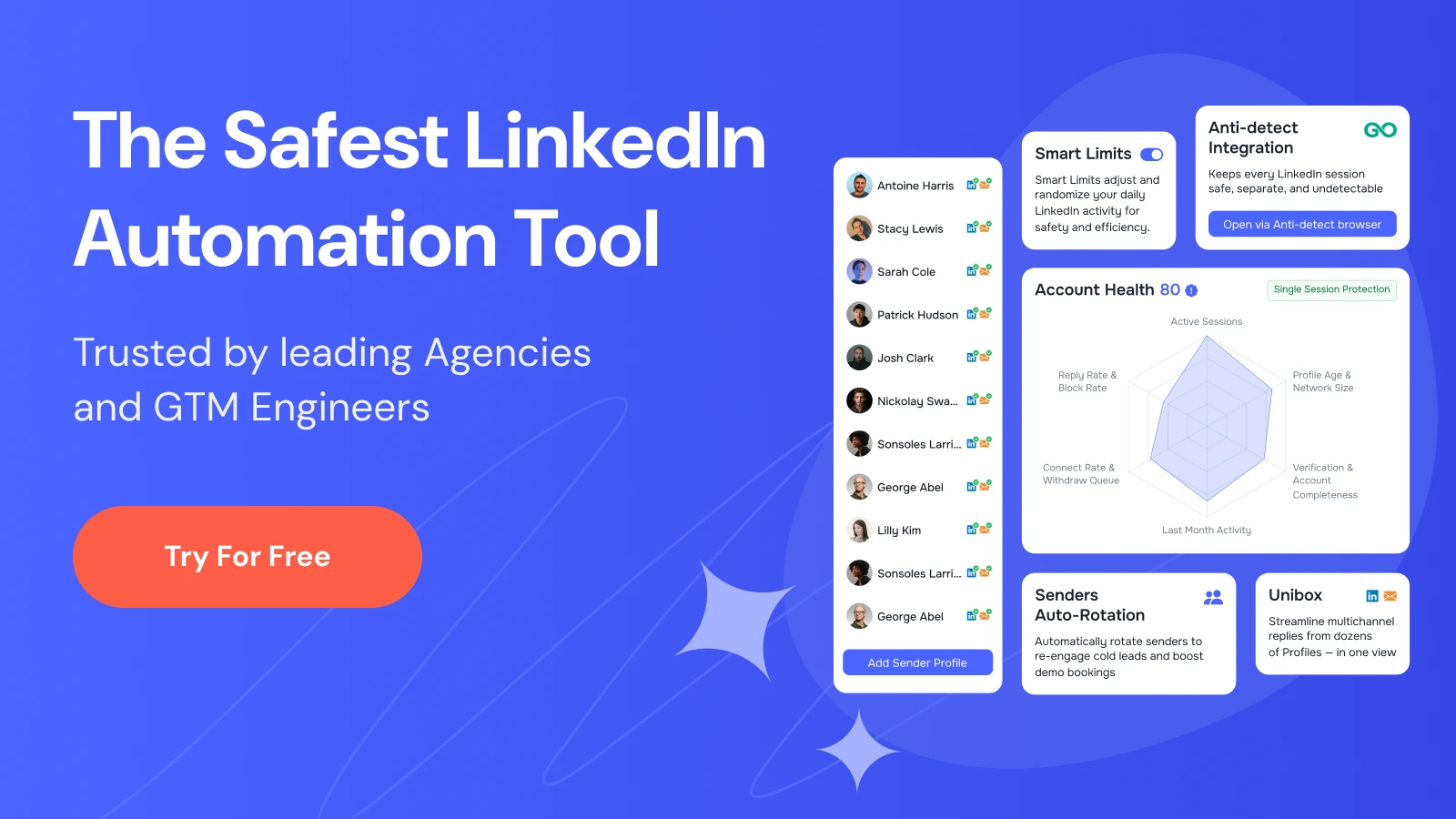
- Security and Compliance: Data protection is non-negotiable, especially for LinkedIn-heavy strategies. Expert advice emphasizes vendors with robust safeguards to comply with privacy regulations Forbes CRM Guide. Explore our Single Session LinkedIn Protection for the safest outreach at GetSales.io LinkedIn Safety.
By focusing on these, you'll avoid common mistakes like overlooking integrations, which can lead to data silos and reduced efficiency.
Benefits and Statistics: Why a Strong CRM Matters
CRM adoption is booming, with the global market projected to reach $128.97 billion by 2028, driven by automation and personalization needs Statista CRM Market. Sales teams using CRMs report 29% higher sales and 34% improved productivity, according to Nucleus Research. These systems centralize data, automate tasks, and provide real-time analytics — key for scaling outbound efforts without risking account bans.
In our experience at GetSales.io, users leverage Analytics & Insights to track performance and optimize strategies, resulting in higher engagement rates. As one expert notes, "Selecting a CRM isn’t just about features — it’s about finding a platform that aligns with your processes, supports your teams, and can scale as your business evolves" [Source: CRM Selection Guide].
Best Practices for Implementing a CRM
To successfully implement a new CRM, form a cross-departmental steering committee including sales reps, managers, and IT for alignment— a best practice that boosts adoption by 80%, per industry insights. Test demos focusing on sales-specific workflows, define clear objectives like revenue growth, and evaluate vendor support.
We recommend starting with a platform like ours that offers no-code workflow builders for omnichannel automation across LinkedIn, email, and SMS. For personalized advice, book a session at Inbound Content Demo to see how we can tailor solutions for your team.
Common pitfalls to avoid: Ignoring user input, which leads to low adoption, or selecting based solely on features without considering total cost of ownership (TCO).
Recent Trends and Unique Insights
AI and no-code customization are transforming CRMs, with 75% of sales leaders prioritizing predictive analytics for lead scoring in 2023 surveys. Integration with outreach tools like LinkedIn is a game-changer for B2B teams, enabling account-based strategies that increase conversions by 20-30%.
A unique insight from success stories: One company integrated CRM with ERP to unify insights, unlocking hidden sales opportunities and replacing disparate apps. At GetSales.io, our Account-Based Outreach and Lead Management & Segmentation tools provide ultra-targeted campaigns, helping teams like yours achieve similar results. Discover more at GetSales.io.
FAQ
What is the most important factor when choosing a CRM for sales teams? The top factor is alignment with your business needs, such as automation for multichannel outreach, to ensure high adoption and ROI.
How much does a good CRM cost? Costs vary, but effective options start at $59 per month, like our plans at GetSales.io, scaling with features and team size.
Can a CRM integrate with LinkedIn and email? Yes, modern CRMs like ours offer seamless integrations for unified multichannel campaigns, improving lead quality and safety.
What if my team is new to CRMs? Start with user-friendly platforms offering onboarding and demos — book one with us to ease the transition.
How do I ensure CRM security for sales data? Choose vendors with compliance features; our single-session protection minimizes risks, especially for LinkedIn activities.