
 Back to articles




Did you know that teams using advanced sales tools like LinkedIn Sales Navigator report up to 30% higher win rates in B2B deals, according to recent industry benchmarks? In a competitive 2026 landscape where outbound prospecting demands precision and scale, understanding the right pricing and features can make or break your sales strategy. In this article, we'll break down LinkedIn Sales Navigator team pricing, explore its value for collaborative teams, and share how tools like our GetSales.io platform can enhance your outreach safely and efficiently.
You Will Learn
- The latest pricing structures for LinkedIn Sales Navigator's team plans and how they compare to individual options.
- Key features that make the team edition ideal for sales groups in B2B environments.
- Actionable steps to evaluate and implement the plan for maximum ROI.
- Common pitfalls to avoid when scaling with LinkedIn tools.
- Expert insights on integrating automation for safer, more effective lead generation.
- How complementary platforms like GetSales.io can boost your multichannel strategies.
Understanding LinkedIn Sales Navigator Basics
LinkedIn Sales Navigator has evolved into a powerhouse for B2B sales professionals, offering advanced search capabilities, lead recommendations, and real-time insights that go beyond the standard LinkedIn experience. Launched as a premium tool to help salespeople build and nurture relationships, it now serves over 700,000 users worldwide, with a strong emphasis on team collaboration in its higher-tier plans. For sales teams in 2026, the platform's team pricing model is designed to foster synergy, allowing multiple users to share leads, accounts, and connections seamlessly.
At its core, Sales Navigator comes in three main plans: Core (for individuals), Advanced (often called the Team plan), and Advanced Plus (for enterprises). The Team plan, which we'll focus on here, is tailored for small to medium-sized groups — think sales teams of 5 to 50 members — who need coordinated efforts without the full enterprise overhead. Pricing for this plan typically starts at around $149 per user per month when billed monthly, but opting for annual billing can drop the effective rate to about $108 to $140 per user, saving teams up to 25% overall. These figures can vary slightly based on region, promotions, or additional taxes, so it's always wise to check the official site for the most accurate quote.
What sets the Team plan apart is its emphasis on collaboration. Features like shared lead lists and TeamLink, which pools connections across your group, enable teams to uncover hidden opportunities that solo users might miss. For instance, if one team member has a connection at a target account, the entire team can leverage it for warmer introductions. This is particularly valuable in industries like IT and software, where VPs of Business Development often juggle high-volume outreach.
To put this in perspective, consider the broader context of LinkedIn's ecosystem. With over 1 billion members globally as of recent reports, the platform remains the go-to for professional networking Wikipedia on LinkedIn. Sales Navigator taps into this by providing AI-powered tools for personalized outreach, which can increase engagement rates by 20-30% compared to generic messaging. However, teams must navigate LinkedIn's strict policies on automation and messaging limits to avoid restrictions — something we'll touch on later.
In our experience at GetSales.io, where we specialize in cloud-based sales automation, integrating tools like Sales Navigator with safe, compliant platforms is key. Our LinkedIn safety features ensure that your automations run without risking account bans, complementing Navigator's prospecting power.
💡 Tip: When evaluating team pricing, calculate the total cost per user including any add-ons like extra InMail credits— this can help justify the investment by forecasting potential revenue gains from improved lead quality.
Comparing Pricing Tiers and Value
Diving deeper into LinkedIn Sales Navigator team pricing, it's essential to compare it against other tiers to see where the real value lies for collaborative groups. The Core plan, aimed at individual users, clocks in at about $99 to $119 per month (or $80 to $90 annually), offering basics like advanced search filters and 20-50 InMail credits per month. It's great for solo SDRs but lacks the shared functionalities that teams crave.
The Advanced Team plan ups the ante with 50 InMail credits per user, enhanced reporting, and CRM integrations that sync data across your team. Annual commitments here not only reduce costs but also provide stability for scaling operations. For larger setups, the Advanced Plus plan offers custom pricing starting at around $1,600 per seat annually, with deeper analytics and enterprise-level support — ideal for organizations with complex CRM needs.
Here's a quick comparison table to illustrate:
|
Plan |
Monthly Price (Per User) |
Annual Effective (Per User) |
Key Team Features |
Best For |
|---|---|---|---|---|
|
Core |
$99–$119 |
$80–$90 |
Basic search, limited InMails |
Solo professionals |
|
Advanced (Team) |
$149–$180 |
$108–$140 |
Shared lists, TeamLink, reporting |
Small-medium sales teams |
|
Advanced Plus |
Custom (from $1,600/year) |
Custom |
Deep CRM, advanced analytics |
Large enterprises |
These prices are drawn from official sources and may include regional variations LinkedIn Sales Solutions. Statistics show that teams on the Advanced plan often see a 15-25% increase in pipeline velocity due to better collaboration, as per industry reports from sources like HubSpot HubSpot on Sales Navigator.
For agencies and founders in lead generation, the Team plan's cost-effectiveness shines when you factor in scalability. Adding users might incur a 20% premium per seat, but the shared insights can amplify outreach efforts exponentially. In 2026, with economic pressures pushing for efficiency, many VPs are opting for this middle-ground plan to balance features and budget.
At GetSales.io, we've seen clients pair Sales Navigator with our multichannel automation to 10x their outreach volume safely. Our platform's rotating sender profiles and single-session protection align perfectly with Navigator's data enrichment, helping teams avoid common pitfalls like over-messaging explore our safety protocols.
⚠️ Warning: Don't overlook hidden costs like training time or integration fees when budgeting for team pricing — factor these in to get a true picture of ROI.
Best Practices for Implementing Team Plans
Once you've grasped LinkedIn Sales Navigator team pricing, the next step is implementation. To get the most out of it, follow these actionable best practices, tailored for sales leaders in 2026.
- Assess Your Team's Needs: Start by auditing your current outreach volume and collaboration gaps. If your team is siloed, the Team plan's shared features will deliver quick wins. Use the 30-day free trial to test this without commitment.
- Opt for Annual Billing: To maximize savings, commit to the annual plan right away. This not only cuts costs by up to 25% but also locks in rates amid potential price hikes.
- Integrate with CRM Tools: Link Sales Navigator to your existing CRM (like Salesforce) for seamless data flow. This step can boost lead conversion by 20%, as real-time updates keep everyone aligned.
- Train and Monitor Usage: Roll out team training sessions focusing on features like AI-powered lead recommendations. Set up dashboards to track InMail response rates and adjust strategies accordingly.
- Combine with Automation Safely: Enhance Navigator with compliant tools. For example, our GetSales.io platform offers omni-channel sequences that integrate LinkedIn data without violating policies, ensuring low ban rates.
Professional advice from sales experts emphasizes starting small: "Begin with the Team plan for groups under 20, and scale to Enterprise as your needs grow," notes a Forbes contributor in a recent piece on B2B tools Forbes on Sales Tech. Regulations-wise, adhere to LinkedIn's terms of service, which limit automated actions and emphasize data privacy under frameworks like GDPR LinkedIn Policies.
By following these steps, agencies can scale client conversions while maintaining account safety — a core focus for GTM engineers prioritizing stability.
📌 Note: Always verify current pricing through an official demo, as promotions in 2026 could offer additional discounts for new teams.
Common Mistakes to Avoid
Even with a solid grasp of LinkedIn Sales Navigator team pricing, pitfalls abound. One common error is underutilizing collaboration features — teams often treat it like an individual tool, missing out on shared lead lists that could uncover hidden connections. Another is ignoring messaging limits; exceeding InMail quotas without personalization leads to restrictions, potentially halting outreach.
Budgeting missteps are frequent too: Opting for monthly billing to "test the waters" ends up costing more long-term, with no refund for unused features. For enterprise-level firms, jumping straight to Advanced Plus without trialing the Team plan can inflate expenses unnecessarily.
Finally, neglecting integration with automation platforms is a big oversight. Without safe tools, teams risk bans from over-automation. At GetSales.io, we help avoid this with our bug-free, API-driven system that complements Navigator perfectly.
💡 Tip: Regularly review analytics to spot underused features— this can reveal opportunities to optimize your subscription and avoid wasteful spending.
Expert Insights
Experts in B2B sales consistently praise the Team plan for its balance of cost and capability. "In 2026, with AI transforming prospecting, Sales Navigator's team features are indispensable for coordinated efforts," says sales strategist John Barrows in his blog John Barrows Blog. He highlights how shared insights can increase deal closure rates by 15%.
A real-world example comes from a mid-sized IT firm that switched to the Team plan and saw outreach efficiency soar. By pooling connections via TeamLink, they generated 40% more qualified leads within months, as detailed in a case study from Salesforce Salesforce Case Studies.
From our perspective at GetSales.io, founders like those in recruitment agencies appreciate how our platform extends Navigator's reach. "It's the safest way to automate multichannel campaigns," shares Frédéric D, Co-founder of MirrorProfiles, in a testimonial on our site.
These insights underscore the plan's value, especially when paired with tools that ensure compliance and scale.
FAQ
What is the current pricing for LinkedIn Sales Navigator Team in 2026? The Advanced Team plan starts at about $149–$180 per user monthly, or $108–$140 effectively with annual billing, though exact rates vary by region.
How does the Team plan differ from the Core plan? The Team plan includes collaboration tools like shared lists and TeamLink, plus more InMails, making it better for groups versus the individual-focused Core.
Is there a free trial for the Team plan? Yes, LinkedIn offers a 30-day free trial for all Sales Navigator plans, allowing teams to test features before committing.
Can I add users to the Team plan easily? Absolutely — scaling is straightforward, with potential 20% premiums per additional seat, keeping it flexible for growing teams.
How safe is it to automate with Sales Navigator? It's safe if you follow LinkedIn's policies; tools like GetSales.io add layers of protection with single-session tech to minimize risks.
What integrations work best with the Team plan? CRM systems like Salesforce integrate seamlessly, enhancing data sync and reporting for team-wide efficiency.
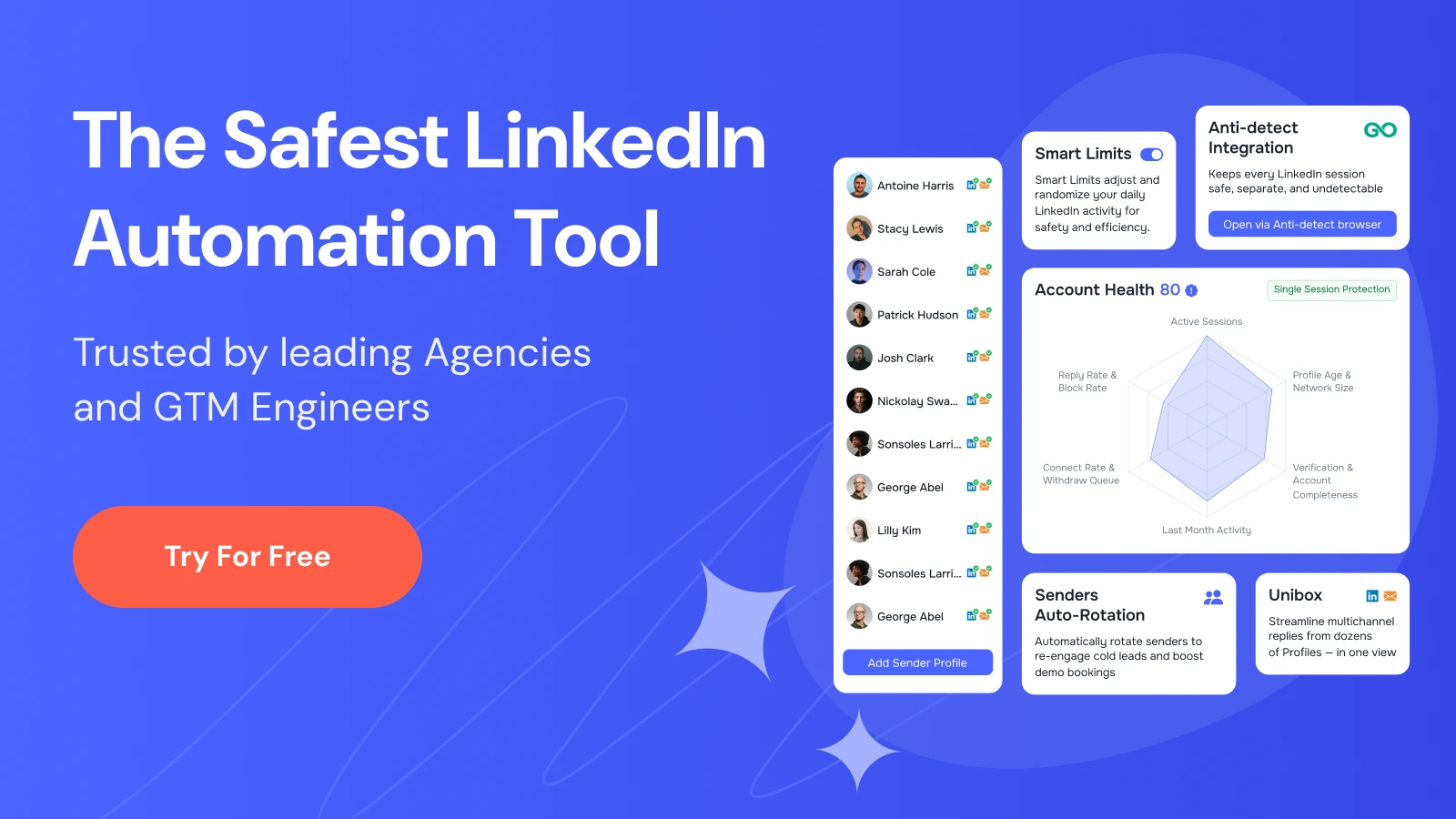
Ready to Optimize Your Sales Outreach?
If LinkedIn Sales Navigator team pricing has you rethinking your strategy, now's the time to act. At GetSales.io, we empower sales teams with cloud-based automation that scales your efforts safely across LinkedIn and email. Book a demo today schedule here to see how our features like account-based outreach and analytics can complement your Navigator setup. Visit GetSales.io to learn more and start transforming your lead generation in 2026.